HOSPITALS · BLOOD BANKS · DIAGNOSTICS
Three facilities. Three Google searches. Three different numbers.
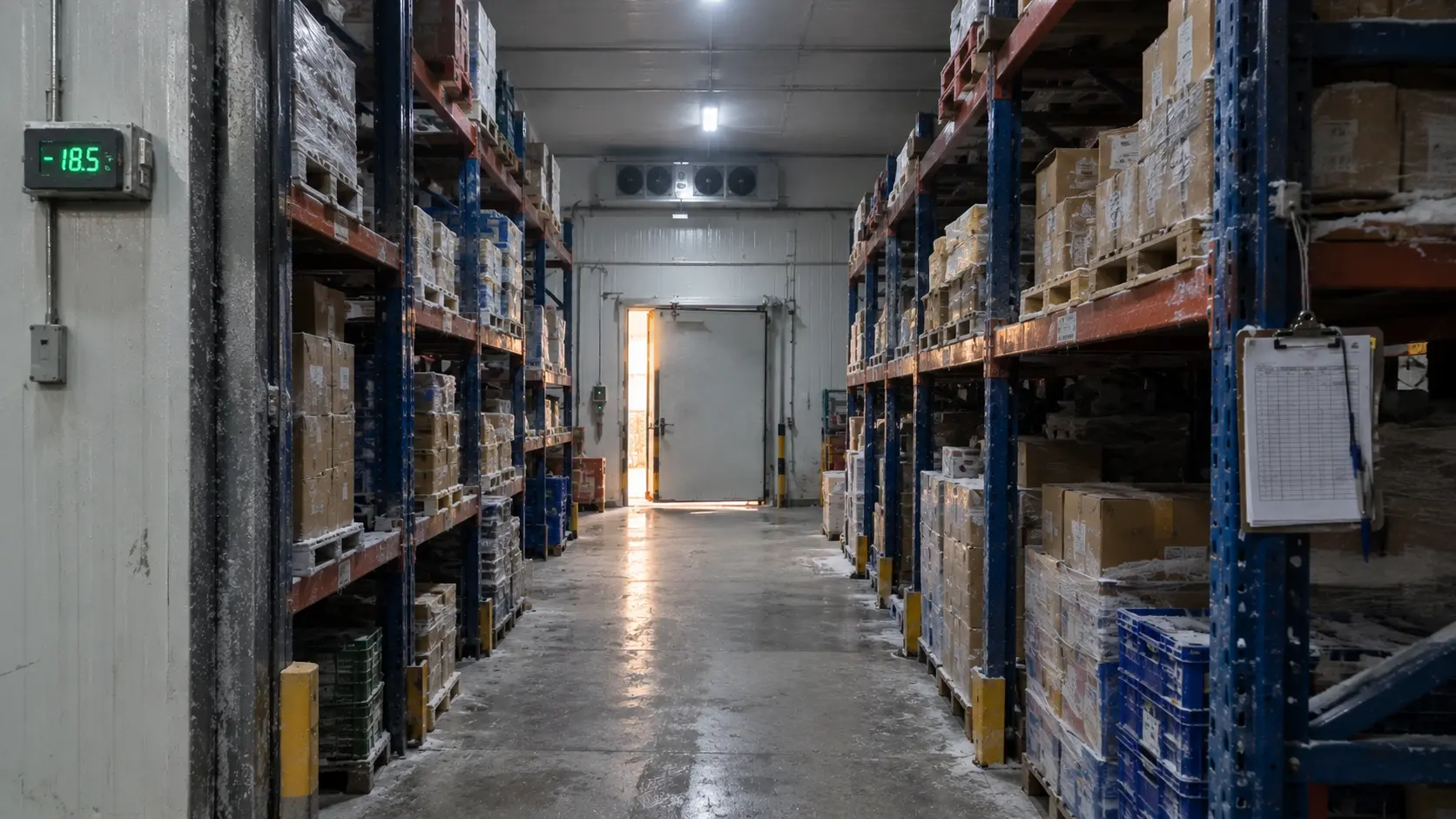
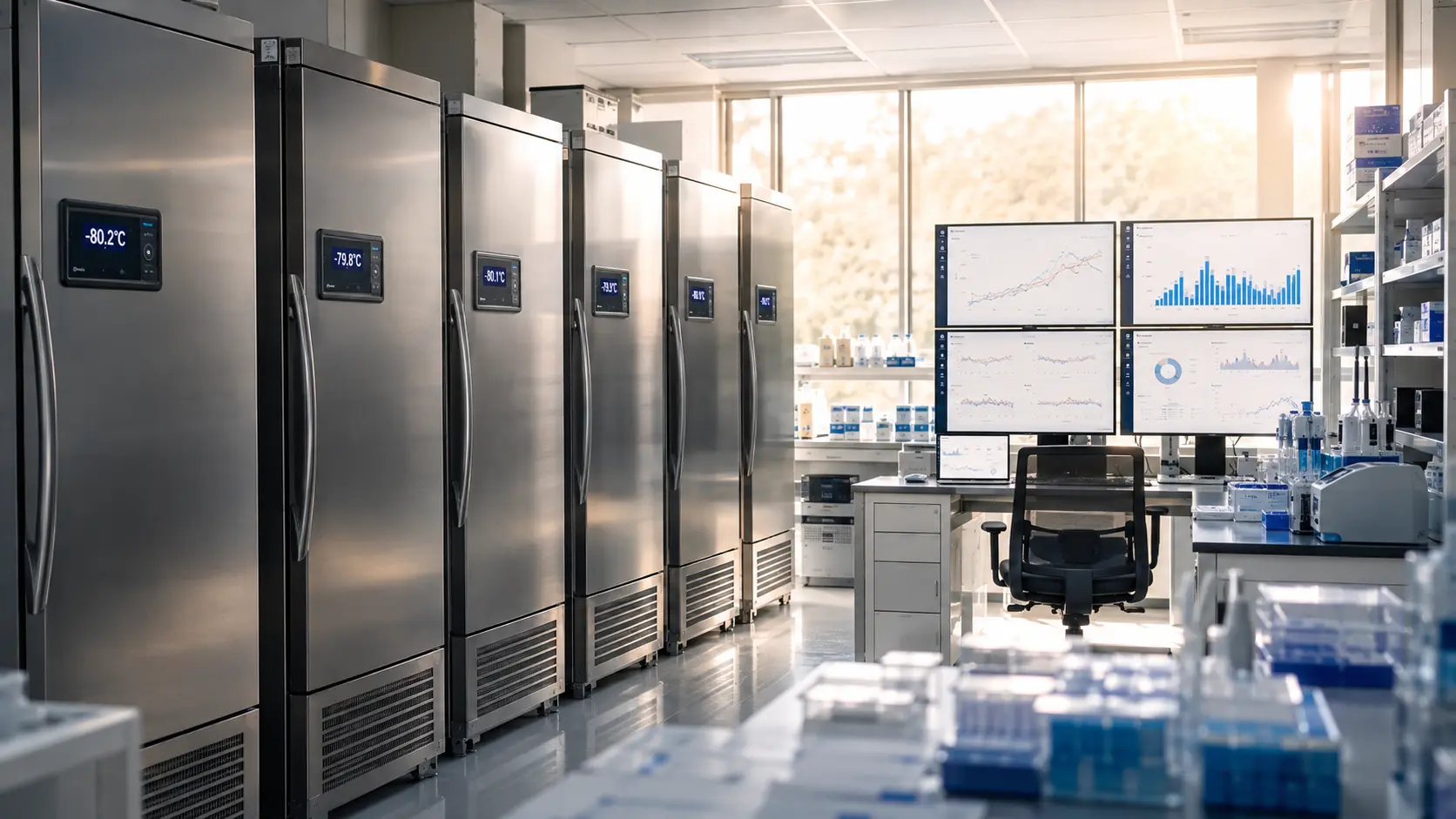
A hospital pharmacist searches "what temperature should a refrigerator be." A blood bank technician searches "whole blood storage temperature." A lab manager searches "NABL reagent storage requirements." Three different people, three different answers — and all three assume someone somewhere is actually checking.
Here are the real numbers, and what happens when nobody does.
What temperature should a hospital pharmacy refrigerator be?
2–8°C. That is the number behind CDC, USP, and Joint Commission guidance for refrigerated medications, vaccines, and insulin. Controlled room temperature drugs sit at 20–25°C, with excursions allowed between 15–30°C under USP guidelines. Freezer storage runs -25°C to -10°C, or exactly what the manufacturer specifies.
None of that is complicated. What is complicated is proving it happened continuously, not just checking it twice a day and hoping nothing shifted in between.
A real case: San Diego VA Healthcare System
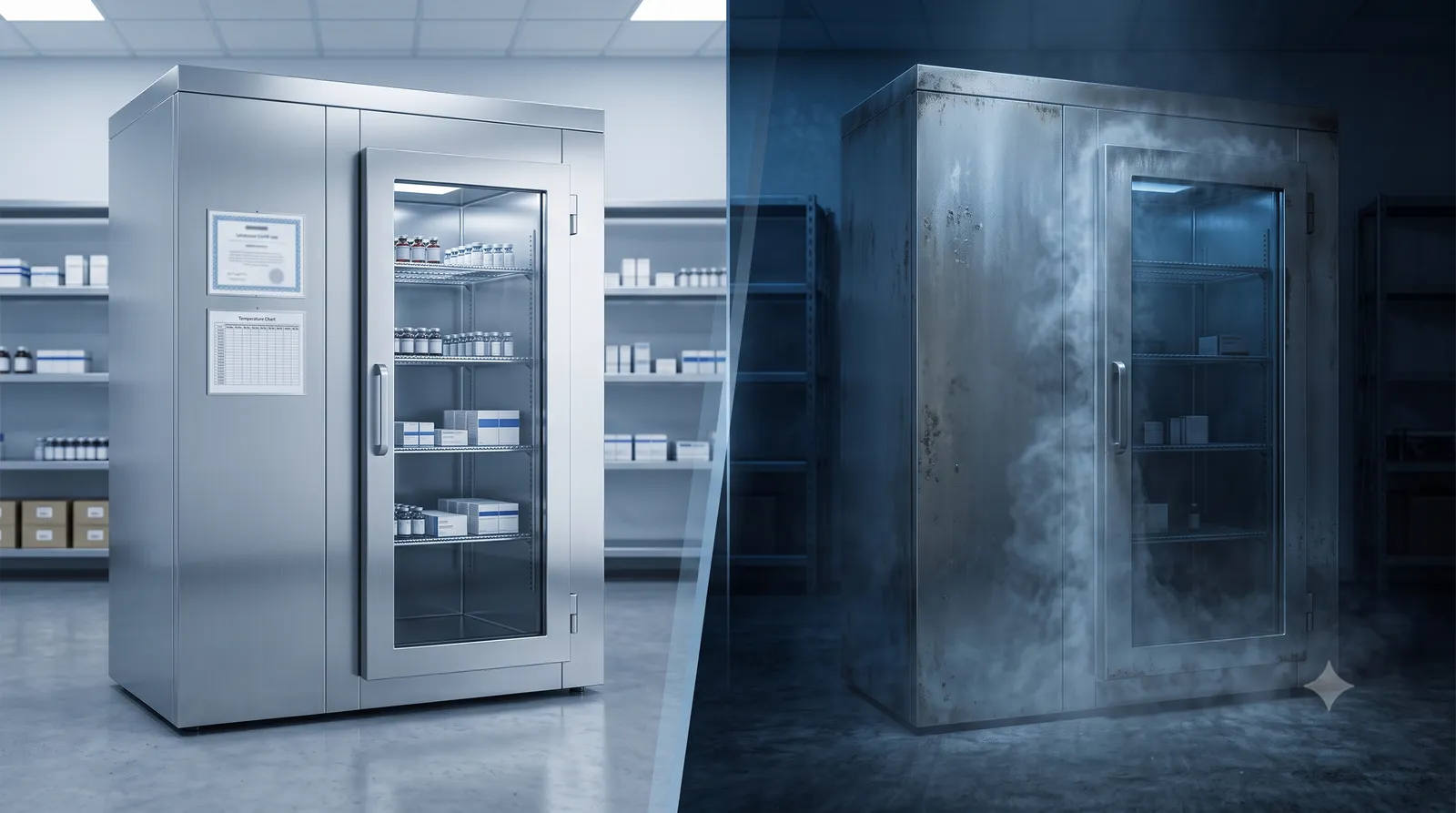
A pharmacy refrigerator failed to hold 2–8°C. Nobody caught it — the temperature alert emails were going to the wrong personnel, and no one acted for 10 days. By the time a routine inspection found the excursion, roughly 1,300 veterans and 240 staff had already received flu vaccines from the compromised stock, administered over a four-day window. The refrigerator had an alarm system. The alarm system worked. The alerts just landed in front of no one.
What temperature should whole blood be stored at?
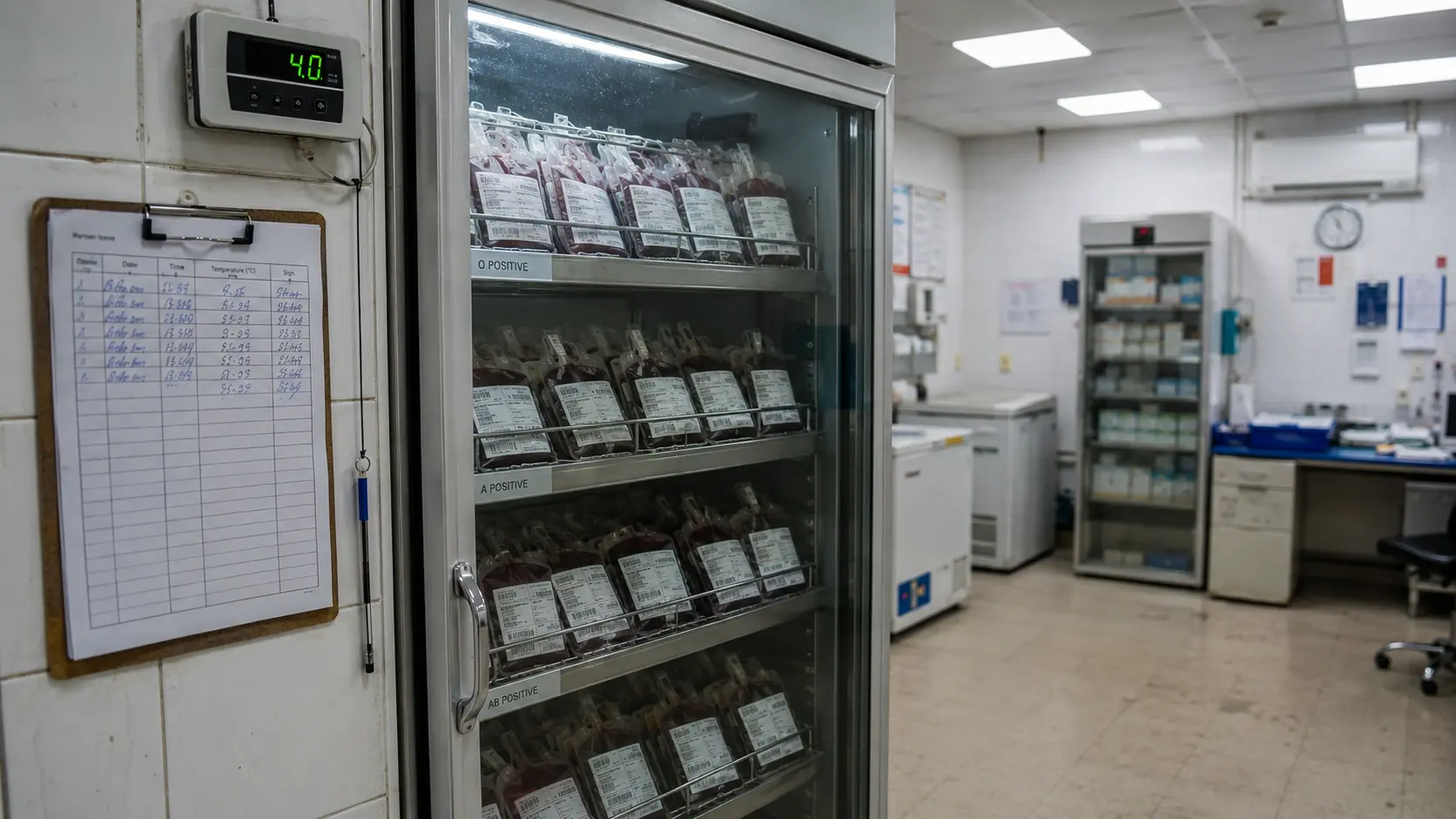
1–6°C, per NABH standards. Frozen components require sub-zero storage specific to the component. The blood component preparation area itself needs to stay air-conditioned at 20–25°C. NABH's blood bank standards go further than a number — they explicitly require continuous temperature monitoring systems on storage refrigerators, not periodic manual checks.
Real wastage numbers, 2025
Gujarat's blood banks collected 11,68,678 units in 2025. Over 58,000 units had to be discarded before they could reach a patient — the official report cites screening gaps and management/planning shortcomings as the two drivers. Separately, a peer-reviewed India-specific study (Cureus, 2025) found the root mechanism plainly: India's blood bank network is decentralized, and without reliable temperature data during transport between blood banks and hospitals, banks routinely reject returned units outright — not because the blood is bad, but because nobody can prove it is not. The same study piloted a fix: a temperature-monitored blood supply chain that cut wastage by up to 15% and reduced shortages by 25% in the cities where it ran.
What are the storage requirements for diagnostic reagents?
Governed by Clause 6.6 of ISO 15189:2022 (the standard behind NABL accreditation) — reagents, consumables, stains, media, kits, and antimicrobials must be stored exactly as the manufacturer specifies, fully documented. In practice, that breaks into three ranges:
- Room temperature reagents: 15–30°C
- Refrigerated reagents: 2–8°C
- Frozen reagents: -15°C to -25°C or colder
NABL does not ask whether your lab was cold enough today. It asks whether you can produce the documented, continuous record proving it was cold enough on every day since the last audit.
The pattern across all three
Hospitals, blood banks, and diagnostic labs are governed by three different standards bodies — Joint Commission/CDC, NABH, and NABL/ISO 15189 — but the actual failure point is identical in every real case above: the number was known, the equipment mostly worked, and the evidence broke down. An alert nobody saw. A transport log that did not exist. A manual check that missed a shift.
The number was never the hard part. The hard part is the proof.
Where Mindlabs fits
Mindlabs Anchor is a wireless temperature data logger and humidity data logger stack, running on Wi-Fi or 4G, streaming continuously to a cloud based temperature monitoring platform — with time-stamped, tamper-evident audit trails and named-user attribution built in.
For hospital and pharmacy cold storage, that means no alert lands in the wrong inbox unnoticed. For blood cold chain monitoring, it means a transport temperature log that travels with the unit — the exact evidence gap India's decentralized blood bank network is currently missing. For diagnostic lab environmental monitoring, it means Clause 6.6's documentation requirement is satisfied continuously, not reconstructed at audit time.
Every reading feeds a 21 CFR Part 11-aligned audit trail — remote temperature monitoring and IoT temperature monitoring across refrigerators, freezers, and controlled rooms, built to survive the exact failure mode behind the San Diego VA and Gujarat cases above: not equipment failure, evidence failure.
Common deployment and integration questions are answered in the Mindlabs FAQ.
See how Anchor supports hospital, blood bank, and lab compliance →
Key takeaways
- Hospital refrigerated storage: 2–8°C. Controlled room temperature: 20–25°C. Freezers: -25°C to -10°C.
- Whole blood: 1–6°C (NABH), with continuous monitoring explicitly required, not optional.
- Diagnostic reagents: 15–30°C (room), 2–8°C (refrigerated), -15°C to -25°C (frozen) — governed by ISO 15189:2022 Clause 6.6.
- Real failures traced back to broken evidence, not broken equipment: misdirected alerts (San Diego VA), missing transport data (India's blood bank network), undocumented conditions (NABL audits).
- A proven fix exists: continuous, temperature-monitored networks cut blood wastage by 15% and shortages by 25% in real pilot data.
Conclusion
The number was never the hard part — 2–8°C, 1–6°C, 15–30°C are all one search away. The hard part is proving, on the day someone asks, that the number held. Not the mapping study from last year. The actual day it happened.
If an inspector — or a patient's family — asked you to prove your storage held its temperature today, how long would it take you to produce that record?
Try the Sensor Drift Risk Score tool → — or talk to the Mindlabs team about putting continuous, audit-ready environmental data behind every refrigerator, freezer, and cold room you are responsible for.