Cold Chain Monitoring for the Food Supply Chain
How to Prevent Spoilage, Extend Shelf Life & Ensure Compliance at Scale
The modern food supply chain operates under tight timelines and even tighter environmental constraints.
From dairy and seafood to frozen foods and fresh produce, maintaining the correct temperature throughout storage and transportation is critical—not just for quality, but for safety.
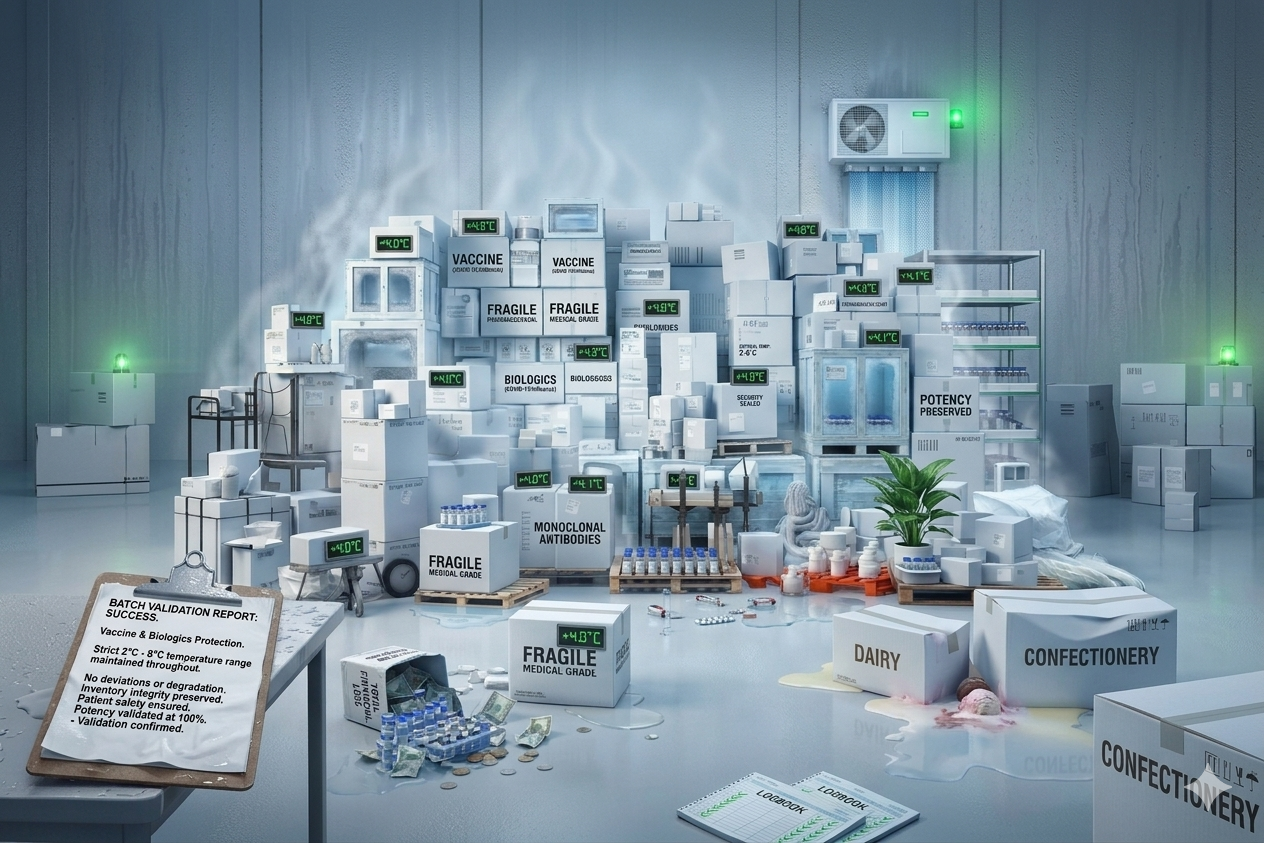
A temperature deviation of just a few degrees during transit or storage can accelerate microbial growth, reduce shelf life, and render products unsafe for consumption. Unlike visible spoilage, many food safety risks develop silently, making them difficult to detect without continuous monitoring.
In India and globally, increasing demand for fresh and frozen products has made food logistics more complex, with multi-stage distribution networks spanning processing units, cold storages, transport fleets, and retail outlets.
Industry Insight
Studies estimate that nearly 30–40% of food produced globally is lost or wasted, with a significant portion linked to poor cold chain management.
Cold chain monitoring systems provide real-time visibility into environmental conditions, enabling food businesses to proactively manage risks, reduce spoilage, and maintain compliance with food safety standards.
What is Cold Chain Monitoring in the Food Supply Chain
Definition
Cold chain monitoring in the food industry refers to the continuous tracking of temperature, humidity, and environmental conditions throughout the storage and transportation of perishable food products.
The primary goal is to ensure that food remains within safe temperature ranges that prevent bacterial growth and preserve freshness.
Typical temperature ranges include:
- 0°C to 4°C for refrigerated foods such as dairy and fresh produce
- -18°C or lower for frozen foods such as meat and seafood
Real Data Insight
Even short exposure (30–60 minutes) to unsafe temperatures can significantly reduce the shelf life of perishable foods.
How It Works
A food cold chain monitoring system functions as a continuous control layer across the supply chain, capturing and transmitting real-time environmental data.
Sensors installed in cold storage units, refrigerated vehicles, and containers continuously monitor temperature and humidity levels. These sensors are designed to detect even small fluctuations that could impact food safety.
The collected data is transmitted via cellular or Wi-Fi networks to a centralized cloud platform, where it is processed and visualized.
Operators can track conditions across multiple locations through a unified dashboard. When temperature thresholds are breached, automated alerts are triggered instantly, enabling immediate corrective action—such as adjusting refrigeration or rerouting shipments.
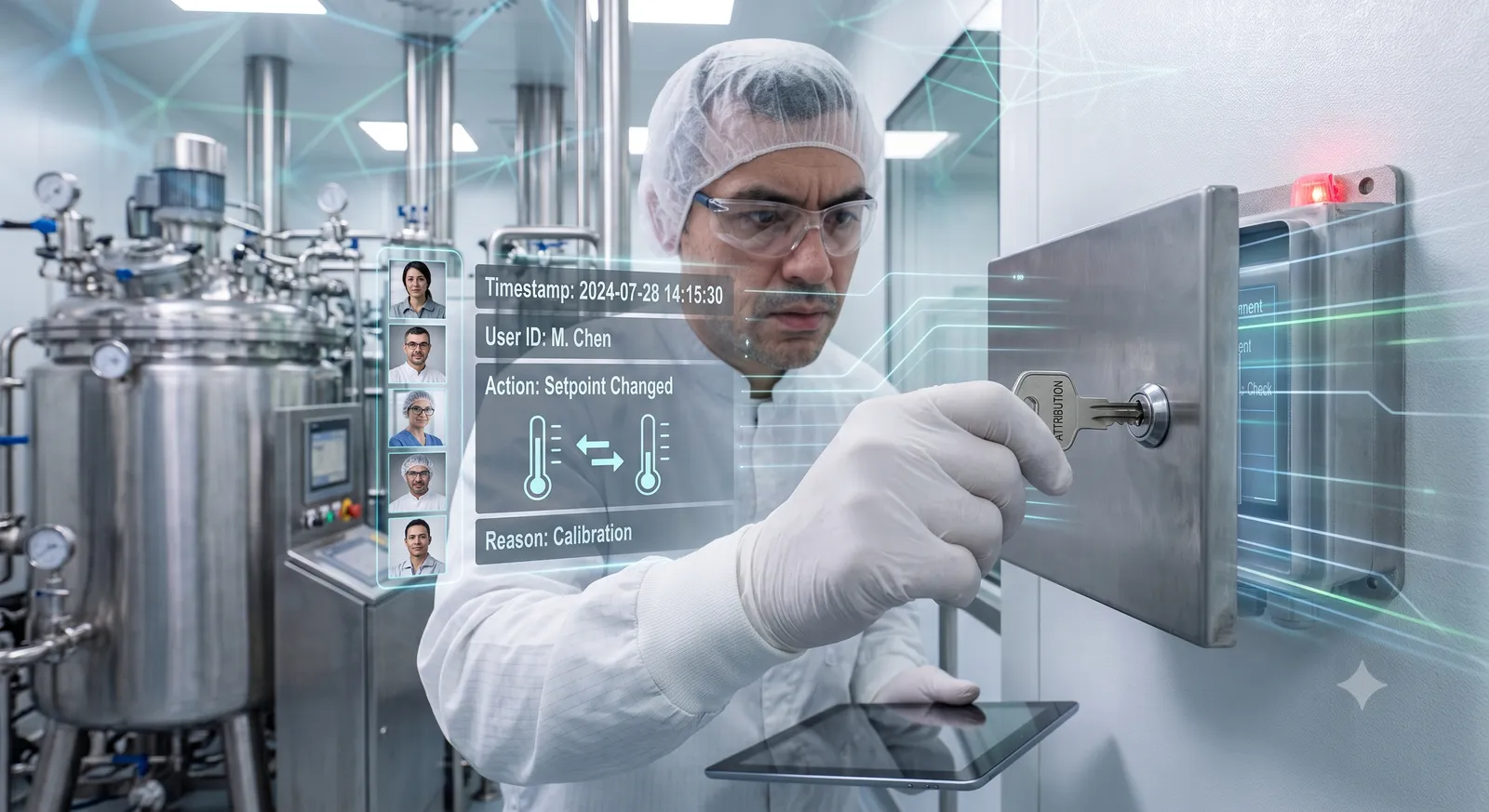
The system also generates digital logs that support compliance with food safety regulations and enable traceability across the supply chain.
Why Cold Chain Monitoring is Important for Food Safety
Key Risks Without Monitoring
Without continuous monitoring, food businesses operate with delayed visibility and limited control.
Temperature fluctuations during storage or transit can lead to:
- Accelerated spoilage and reduced shelf life
- Growth of harmful bacteria such as Salmonella and Listeria
- Increased product recalls and compliance violations
Manual monitoring methods are unreliable and often fail to detect short-duration temperature excursions that still impact product quality.
Impact on Food Safety and Compliance
Food safety regulations increasingly require continuous monitoring and traceability.
Cold chain monitoring supports compliance with:
- HACCP (Hazard Analysis and Critical Control Points)
- FSSAI guidelines in India
- International food transport and storage standards
A robust monitoring system ensures:
- Safe consumption of food products
- Consistent quality across batches
- Audit-ready documentation
- Reduced risk of recalls and penalties
Key Challenges in Food Cold Chain Management
Lack of Real-Time Monitoring
Traditional systems rely on periodic checks, which only capture data at specific intervals. This creates blind spots where temperature excursions can occur undetected.
Complex Distribution Networks
Food supply chains involve multiple stages and stakeholders, including:
- Processing plants
- Cold storage facilities
- Transportation fleets
- Distribution centers
- Retail outlets
Each transition point increases the risk of temperature variation and handling errors.
Equipment Failures and Handling Risks
Refrigeration failures, door openings, and improper loading practices are common causes of temperature excursions.
Without real-time alerts, these issues often remain unnoticed until significant spoilage occurs.
How IoT Monitoring Improves the Food Cold Chain
Real-Time Temperature Monitoring
IoT-enabled devices provide continuous tracking across storage and transportation, enabling proactive management of food safety risks.
Automated Alerts
Instant alerts notify operators when temperature limits are exceeded, allowing quick intervention before spoilage occurs.
Data Logging & Shelf-Life Optimization
Advanced systems analyze historical data to identify patterns such as recurring temperature fluctuations in specific routes or storage zones.
This enables businesses to optimize operations and extend product shelf life.
Mindlabs Monitoring Devices for the Food Supply Chain
Mindlabs Anchor (Food Storage Monitoring)
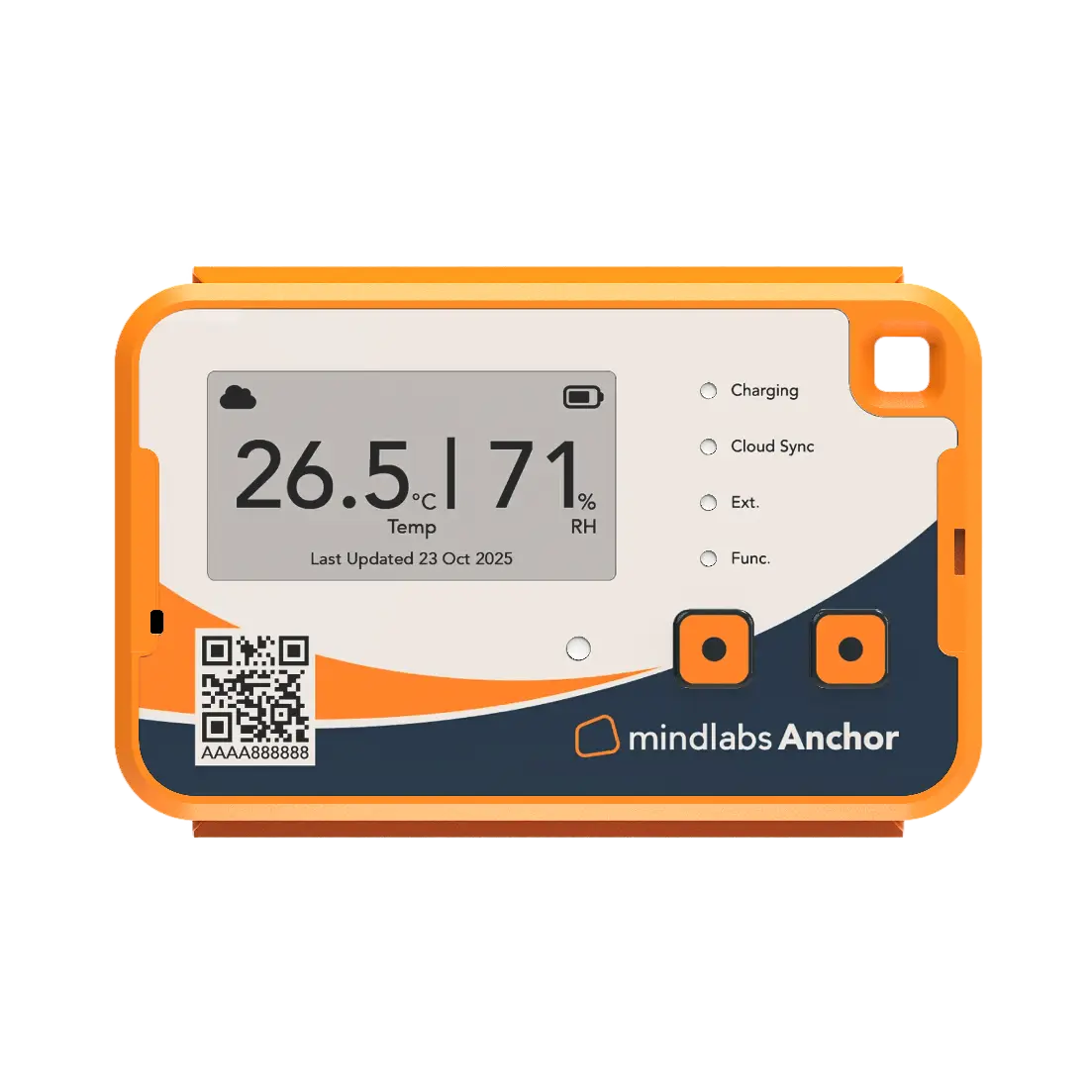
Mindlabs Anchor provides continuous environmental monitoring for cold storage facilities, ensuring stable conditions for food preservation.
- Temperature and humidity monitoring
- Multi-parameter environmental tracking
- 4G & Wi-Fi connectivity
- Real-time monitoring display
- Automated alerts and secure data logging
Mindlabs Go (Food Shipment Monitoring)
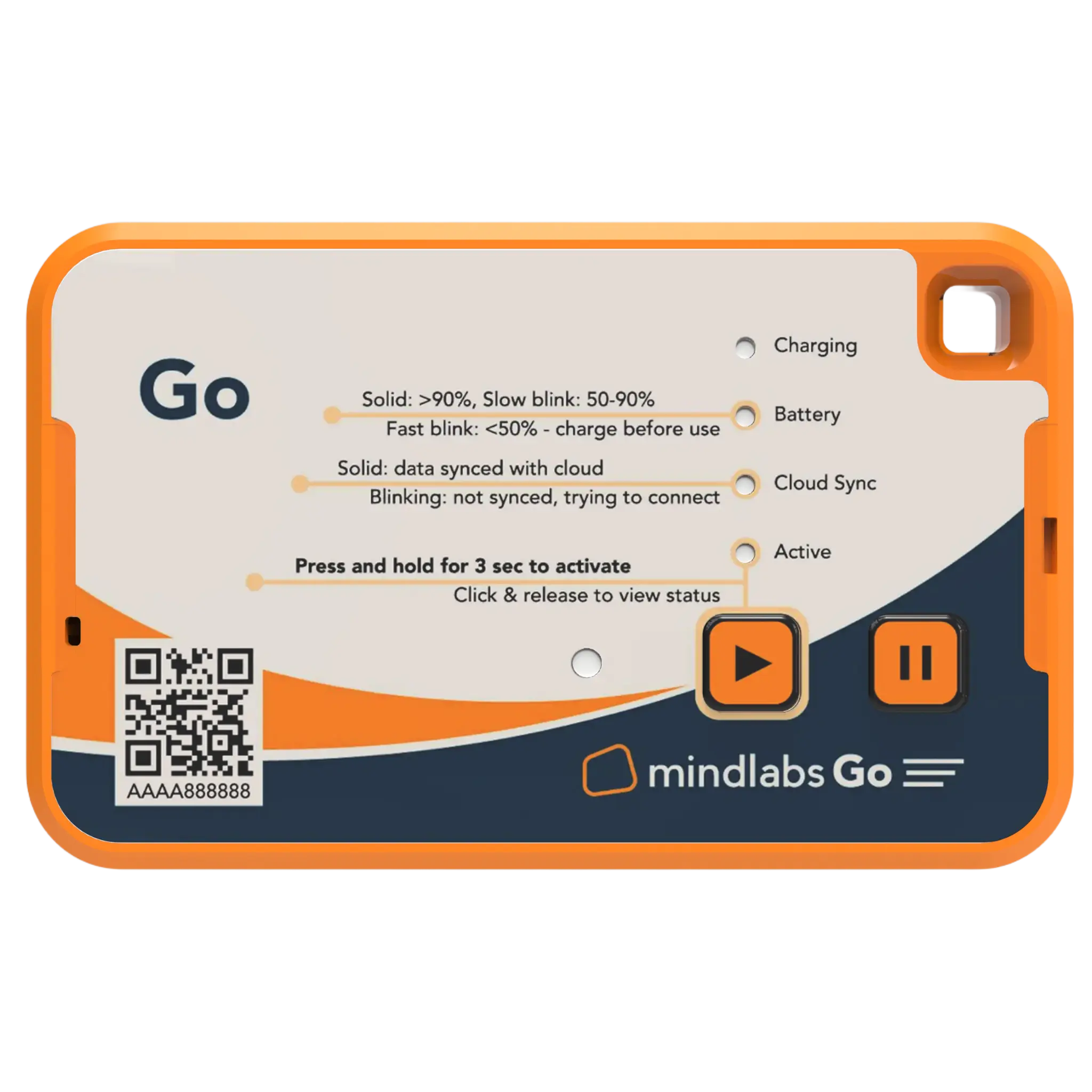
Mindlabs Go enables real-time tracking of food shipments, ensuring that products remain within safe temperature ranges during transit.
- Real-time GPS tracking
- Temperature and humidity monitoring
- Shock and tamper detection
- Global connectivity with long battery life
- Secure, audit-ready data logs
Key Features to Look for in a Food Cold Chain Monitoring System
An effective monitoring system should include:
- Continuous real-time tracking
- Multi-parameter environmental sensing
- Automated alert mechanisms
- Centralized dashboards for visibility
- Compliance-ready reporting and traceability
Best Practices for Food Cold Chain Monitoring
Monitoring Setup
Deploy monitoring devices across all critical control points, including:
- Cold storage facilities
- Refrigerated transport vehicles
- Processing units
- Warehouses and retail storage areas
Ensure proper placement and calibration for accurate data collection.
Documentation and Compliance
Maintain essential records such as:
- Temperature logs
- Calibration certificates
- Food safety compliance documentation
Operational Monitoring
Define standard operating procedures, establish alert response protocols, and conduct regular staff training to ensure consistent performance.
Key Benefits for the Food Industry
Advanced cold chain monitoring systems provide:
- Significant reduction in food spoilage and waste
- Improved food safety and consumer trust
- Enhanced supply chain visibility
- Faster response to temperature deviations
- Simplified compliance with food safety regulations
See Mindlabs' FMCG & food export monitoring solution built for exactly this kind of supply chain.
Conclusion
Cold chain monitoring is a critical enabler of food safety in today’s complex supply chains.
As demand for fresh and temperature-sensitive food products continues to grow, businesses must move beyond manual processes and adopt real-time monitoring systems.
IoT-enabled solutions provide the visibility, automation, and data-driven insights required to reduce spoilage, ensure compliance, and deliver high-quality food products to consumers.
By implementing robust cold chain monitoring, food businesses can not only protect product quality but also build resilient and efficient supply chains.