Qualified Isn't the Same as Accurate: Why Monitoring Drifts After Validation
Qualification is a snapshot. Drift is continuous. The gap between them is where the trouble lives.
There's a quiet assumption built into how most plants treat validation: run the mapping study, pass IQ/OQ/PQ, sign the protocol, and the system is "qualified" — done. From that point, everyone trusts it.
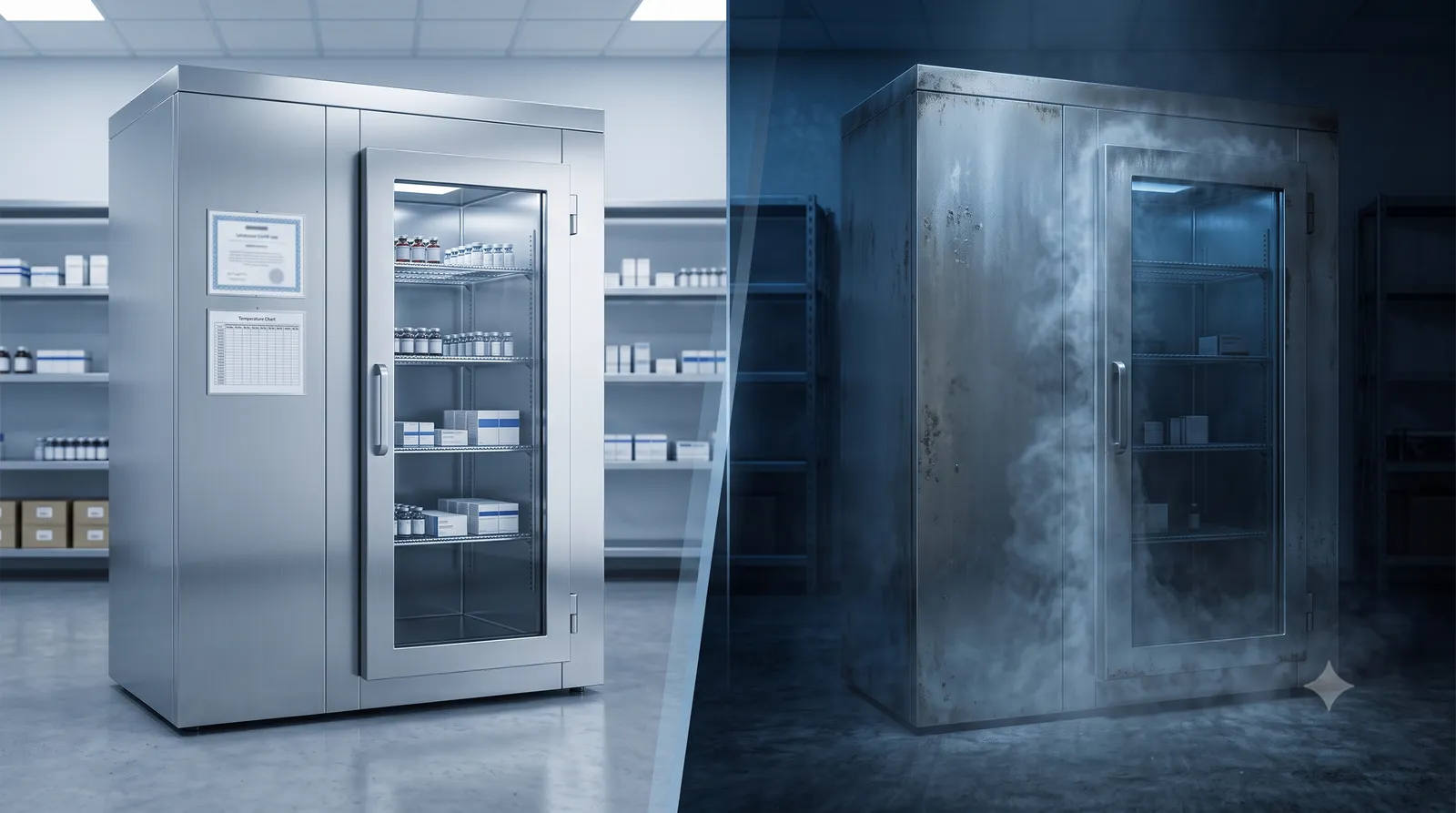
But qualification only proves one thing: that your storage was performing correctly on the specific days you measured it. It is a photograph, not a live feed. And from the moment the protocol is signed, the real world starts pulling the system away from that snapshot — slowly, invisibly, and in ways that rarely trip an alarm until it's already a problem.
This article is about that gap: why monitoring drifts after validation, how the industry already tries to manage it, where those methods leave a blind spot, and what it costs three different people on a plant floor — the validation lead, the engineer, and the warehouse manager.
Industry Insight
WHO Supplement 8 recommends requalifying storage-area temperature mapping every 2–3 years when no other change factors intervene. That interval exists for a reason: the qualified state is expected to decay between studies.
Why drift happens
Drift isn't a sign of a bad system or a careless team. It's physics and time acting on equipment that runs continuously. There are four well-documented causes:
Mechanical wear. Parts, seals, and bearings wear down with daily use. A compressor that held a tight band on commissioning day loses efficiency as it ages.
Sensor fatigue. Electronic probes and temperature or humidity sensors gradually lose accuracy. The reading you trust slowly stops matching reality.
Environmental changes. Shifts in factory humidity, ambient temperature, or heavy vibration alter the baseline the system was qualified against.
System adjustments. Routine maintenance, component replacements, and even minor software updates quietly shift performance.
Notice what these have in common: none of them announces itself. There's no failure event, no red light — just a slow migration away from the qualified state. And that is exactly what makes drift dangerous.
What drift actually costs: three views from one plant floor
The same drift lands differently depending on who you are. Here's how it plays out for three roles — and, in each case, the difference between catching it as a trend and discovering it as a loss.
Validation: the qualification that quietly expired
A stability chamber passes its mapping study clean. Everything is within tolerance, the report is signed, the chamber is qualified.
Eighteen months later, at scheduled requalification, a corner that mapped perfectly now reads consistently warm. The cause is mundane — a sensor had slowly fatigued, and one zone had drifted out of uniformity. But here's the problem: the drift didn't start on requalification day. It started months earlier, and nothing was watching it. Every batch stored in that zone since the drift began is now a data-integrity question the validation team has to answer retroactively.
The qualified state had expired long before the calendar said it was time to look again.
Engineering: caught as a trend, or caught as a loss
Consider two plants running the same equipment.
At the first, a maintenance team reviews calibration as-found data as part of routine trend review and spots three sensors drifting out of spec. They replace them before a single excursion occurs. Nothing is lost; it's a scheduled swap during a planned window.
At the second, there's no continuous trend review. The same slow drift runs unnoticed until a compressor's gradual efficiency loss finally tips a cold room out of range overnight. Now it's not a maintenance task — it's a deviation, an investigation, and potentially spoiled product.
Same failure mode. Same equipment. The only difference was whether someone could see the trend forming in the gap between checks. This is the practical meaning of "reactive versus predictive": predictive maintenance programmes flag developing compressor issues days ahead by watching run-hours and amperage trends; reactive maintenance finds them at 2 a.m.
Warehouse: the excursion, and the record that wasn't there
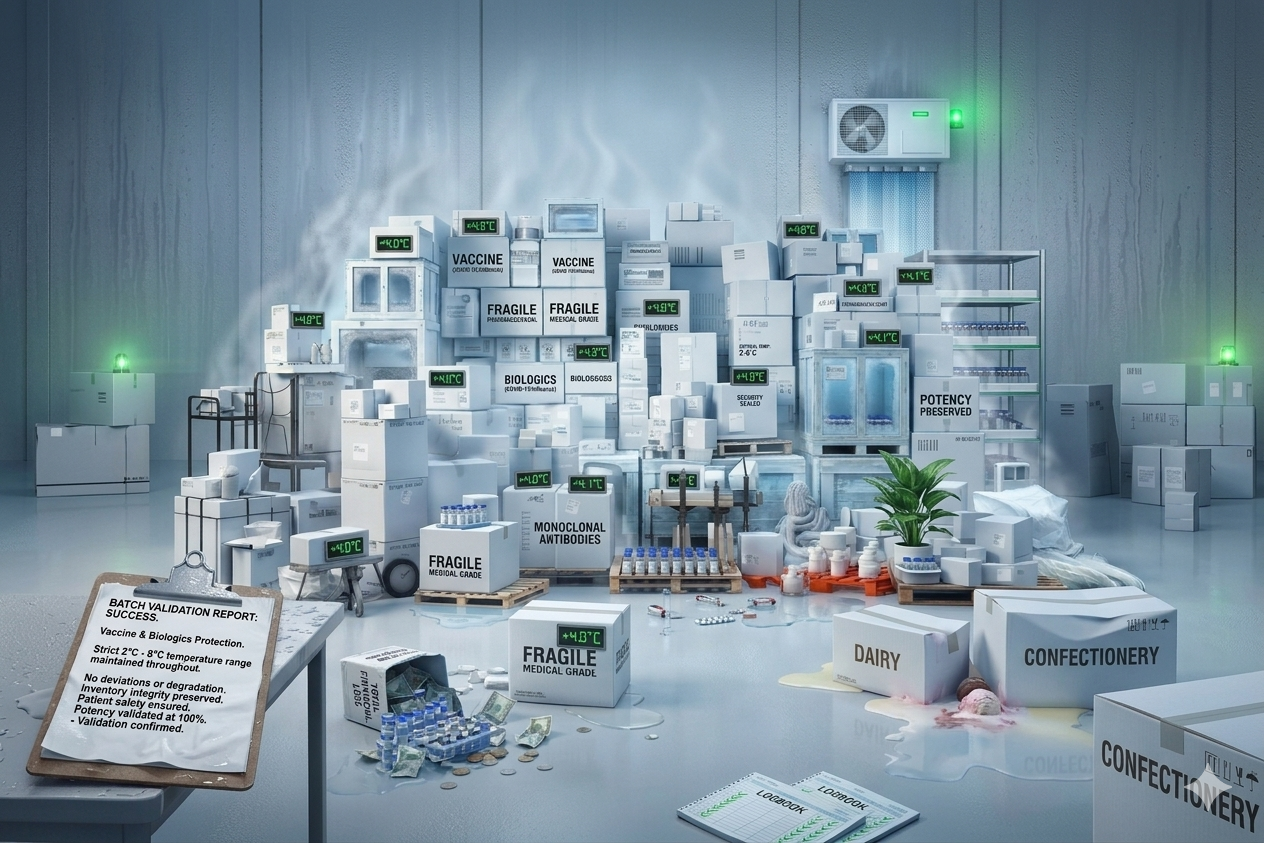
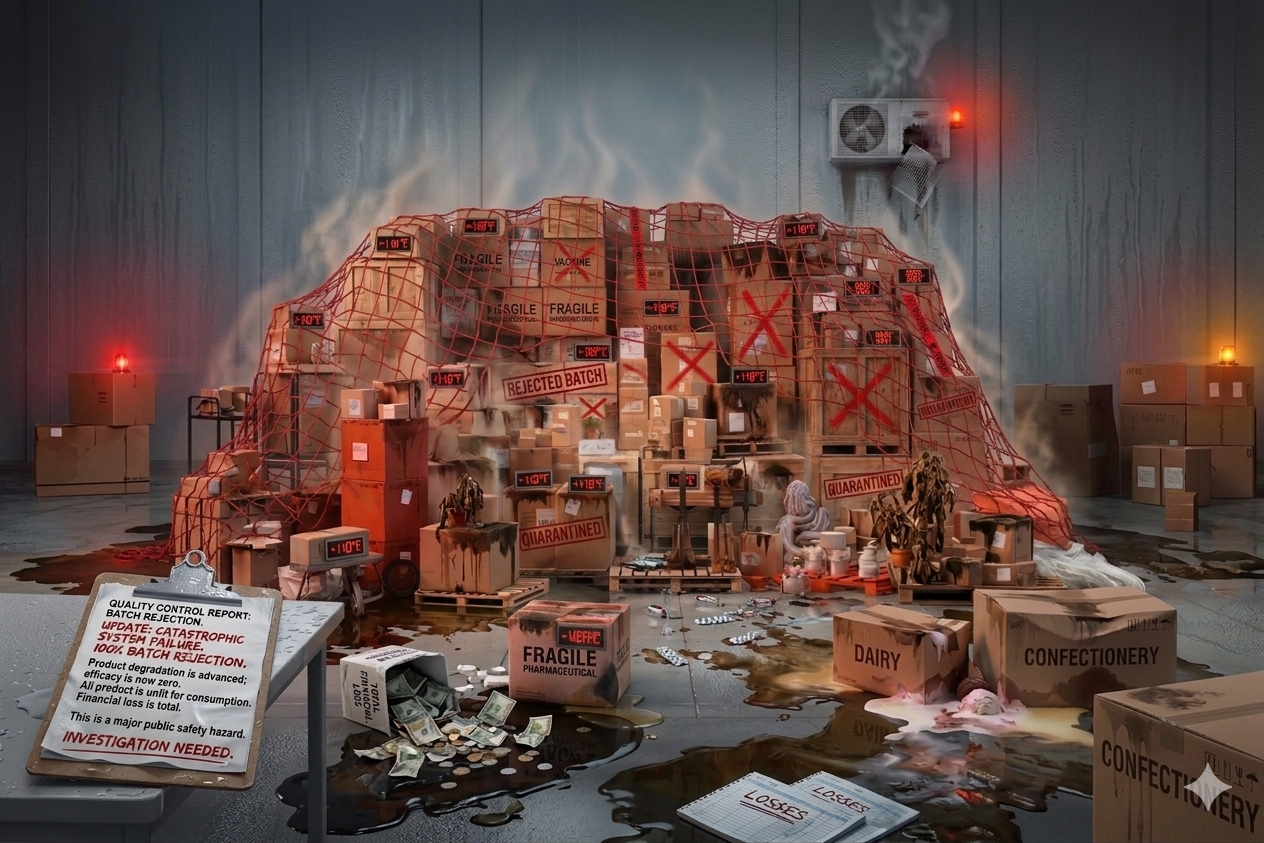
A cold room's chilled-water supply is interrupted over a weekend. The compressors overheat, hit thermal cutoff, and shut down. By Monday morning, the room is warm.
The spoiled stock is the obvious cost. But in an inspection, the more expensive problem is often quieter: no documented evidence that the alarm was seen and acted on within the required window. In real audit-readiness reviews, the most common gap isn't the monitoring hardware at all — it's the absence of proof that alarm response happened in time. A warm room is a loss. A warm room with no defensible response record is a finding.
Real Data Insight
Across audit-readiness reviews, the most frequently cited gap is not missing sensors — it's the missing evidence that alarm responses were reviewed within the required timeframe. The data existed. The proof that someone acted on it did not.
How the industry already manages drift
It's only fair to say: the industry is not blind to drift. There are four established controls, and good plants use all of them.
Calibration. Regular checks of instruments against certified standards to catch measurement shifts early.
Continued Process Verification (CPV). Ongoing statistical monitoring of production data to spot negative performance trends before a failure occurs.
Periodic requalification. Planned re-testing of equipment and utilities at set intervals — often annually, or every 2–3 years for storage mapping — to confirm they remain in a qualified state.
Change control. Formal reviews that trigger requalification or revalidation whenever a major change or repair occurs.
These are real, necessary, and effective at what they do. The blog isn't arguing against any of them.
The gap they all share
Look closely at those four controls and a pattern emerges: every one of them is either periodic or event-triggered.
Calibration catches drift at the next scheduled check. Requalification catches it at the next cycle. Change control only fires on a known, declared change. CPV is the closest to continuous, but it watches process performance data, not the live environmental state of every storage zone between studies.
So what happens to drift that begins the day after a calibration? Or the slow sensor fatigue that starts six months into a two-year requalification interval? Or a degradation with no declared "change" to trigger a control? It runs invisible — until the next scheduled touchpoint catches it late, or until it surfaces as an excursion.
That is the gap. Not a failure of the existing controls, but the time between them — precisely where drift does its quiet work.
Watching the gap: continuous monitoring
This is the specific problem continuous environmental monitoring is built to solve. It doesn't replace calibration, CPV, requalification, or change control. It covers the interval those controls can't — the day-to-day, hour-to-hour state of the qualified environment between scheduled touchpoints.
Mindlabs Anchor (Facility Monitoring)
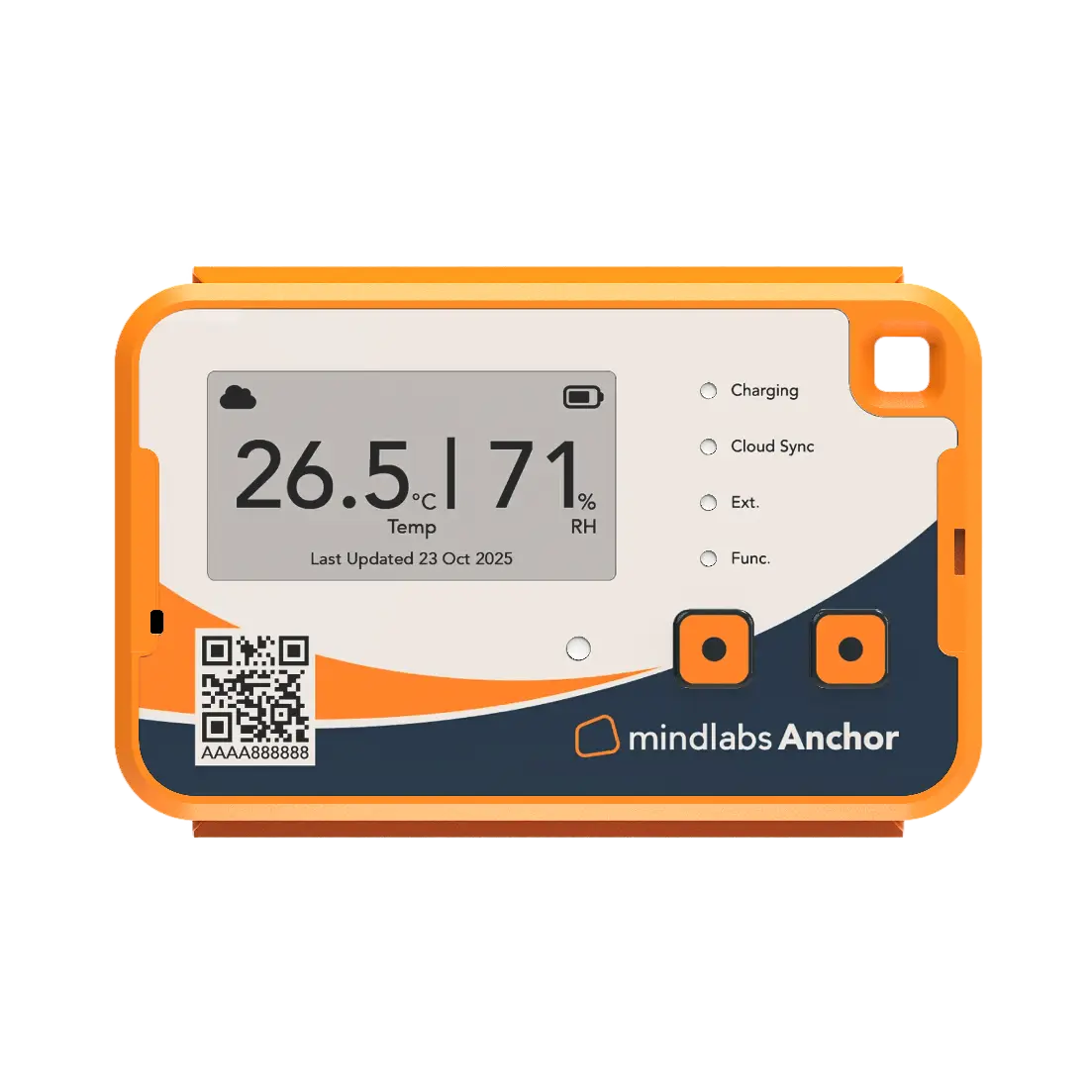
Mindlabs Anchor provides continuous temperature and humidity monitoring for pharmaceutical cold rooms, chambers, warehouses, and laboratories — sitting on top of the equipment you already run, regardless of age.
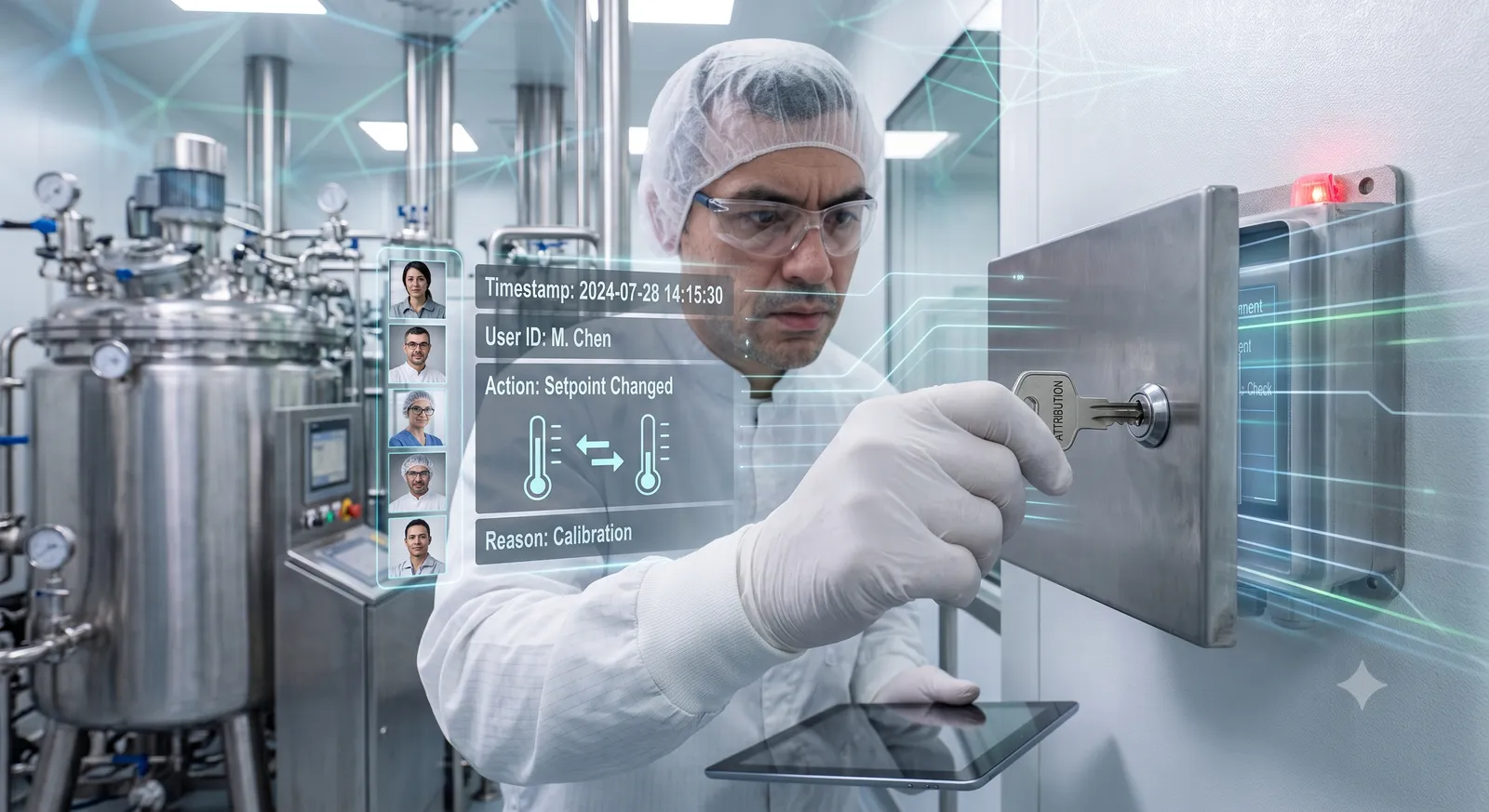
Instead of learning about drift at the next calibration or the next requalification, teams see the trend forming as it happens: a zone creeping warm, a sensor's readings diverging, an overnight excursion caught in minutes rather than discovered on Monday. Every change to a setpoint or configuration is captured in a tamper-evident audit trail, and alerts with a documented response close the exact gap that inspections probe.
Learn more about Mindlabs Anchor
Industry Insight
Continuous monitoring doesn't make qualification obsolete — it protects the qualified state between qualifications. Industry guidance increasingly frames continuous mapping and monitoring as a way to reduce reliance on periodic re-mapping and support a more proactive, data-driven validation strategy.
Why this matters now: Schedule M
The timing isn't incidental. Revised Schedule M, enforceable for all Indian drug manufacturers from January 1, 2026, moved the standard from "do you have the records and SOPs?" to "can you prove real-time, ongoing control?" It explicitly brings computerised systems, ALCOA+ data integrity, audit trails, and periodic quality review into scope.
A one-time qualification, however thorough, doesn't answer the question inspectors now ask: can you show the qualified state held — continuously — between studies? Continuous monitoring is how you answer that.
Key takeaways
Qualification proves your system was accurate on the day you measured it. Drift — from mechanical wear, sensor fatigue, environmental change, and system adjustments — pulls it away from that state continuously and invisibly. The industry's existing controls (calibration, CPV, requalification, change control) are essential, but every one of them is periodic or event-triggered, leaving the interval between them uncovered. That interval is where drift becomes an expired qualification, an overnight excursion, or an audit finding.
The difference between catching drift as a manageable trend and absorbing it as a loss is simply whether someone was watching the gap.
Conclusion
"Qualified" is a photograph. Your facility is a live feed. Between the two lies the space where sensors fatigue, compressors age, and cold rooms drift warm at 2 a.m. — the space your scheduled controls only visit occasionally. Continuous monitoring doesn't replace those controls; it watches the gap they leave open, so drift shows up as a trend you can act on rather than a loss you have to explain. Under a regulatory regime that now expects real-time, ongoing control, that's no longer an upgrade — it's the baseline.
Wondering how much of the gap between your qualifications is currently unwatched? Talk to the Mindlabs team about layering continuous, audit-ready monitoring over your existing facility — without a requalification project.