Every Vendor's Leg Was Fine. The Shipment Still Failed.
Why the handoffs between your vendors — not the flight or the truck — are where pharma exports go wrong
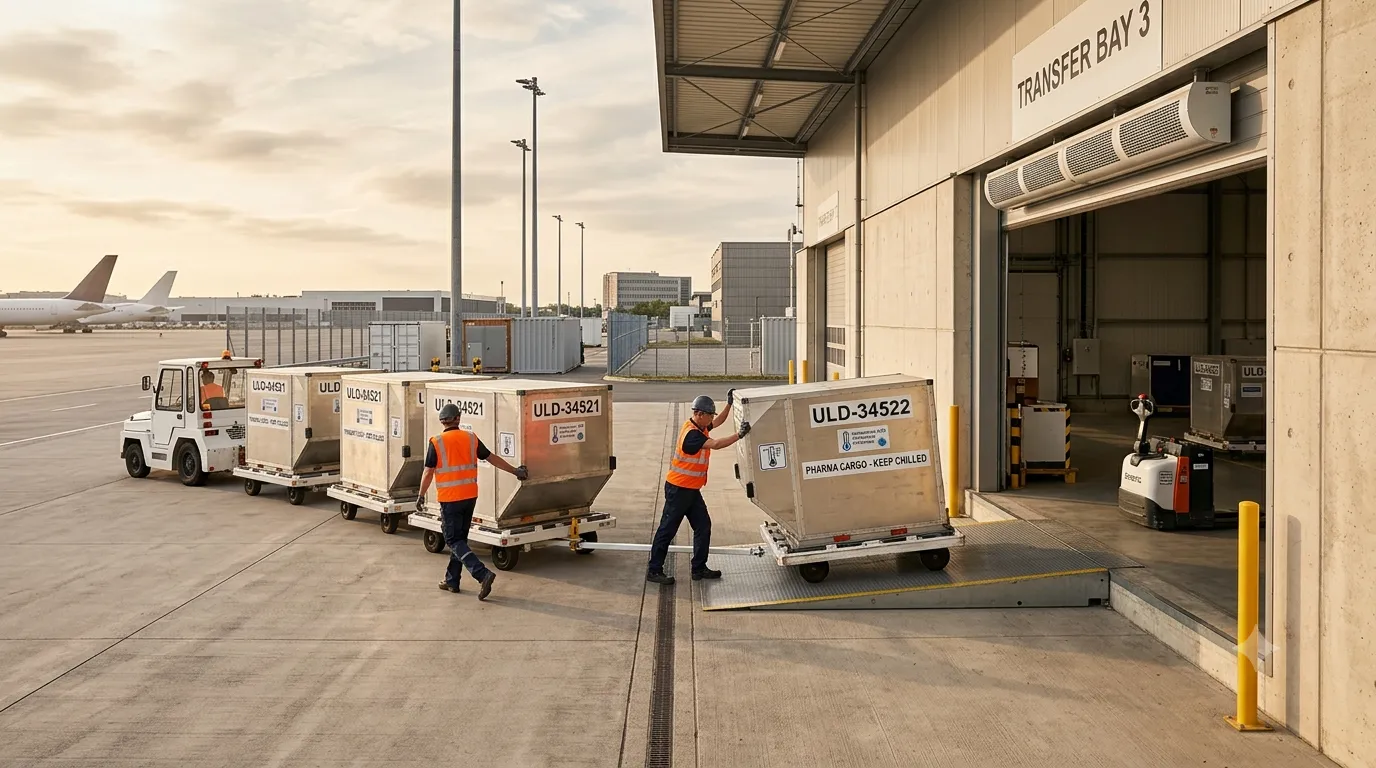
If you run a pharmaceutical supply chain, you already know the strange arithmetic of accountability: you're responsible for the entire journey, from the factory gate to the destination dock, but you only ever see it in pieces. Because that's how it's built. A single export shipment passes through a freight forwarder, an airline, a ground handling agent, a customs broker, a destination warehouse, and a last-mile carrier. Six vendors. Sometimes more. Each one owns a leg. Each one can prove their leg was fine.
And that is precisely the problem.
When a temperature-sensitive shipment is rejected on arrival, the most expensive question isn't what happened. It's where — and whose it was. With most cold-chain setups, nobody can answer either. This article is about the gap where that accountability disappears, why it's so hard to see, and what actually closes it.
Industry Insight
The biopharma industry loses an estimated $35 billion every year to temperature-controlled logistics failures (IQVIA). Up to 20% of temperature-sensitive pharmaceuticals are damaged or exposed to significant excursions during transport, and roughly 30% of scrapped product traces back to cold-chain logistics issues.
The failure isn't where you're looking
When a cold-chain shipment fails, the instinct is to blame transport — the flight, the truck, the reefer. But that's rarely where it breaks. Industry practitioners are increasingly clear that excursions cluster not within a single provider's operation, but between providers — at the handoffs.
Between the freight forwarder and the customs broker. Between customs clearance and the warehouse. Between the warehouse and the final-mile carrier. Every one of those transitions is a gap in the temperature record — and, just as importantly, a gap in accountability. As one logistics analysis puts it plainly: every gap between vendors is a gap in accountability, and a gap in the temperature record.
The data backs this up. A shipment can spend the overwhelming majority of its transit time inside validated conditions and still fail — because a disproportionate share of temperature failures happens during customs dwell, tarmac time, and regional carrier handoffs, relative to the actual transit hours involved. A four-hour dwell at a single customs checkpoint is often enough. The shipment was fine for thirty hours. It came undone in four.
Why the seam is invisible
Here's what makes the handoff gap so dangerous: it's the one part of the journey nobody is watching in real time.
Milestone scans tell you where, not how. You know the box was scanned at the hub. You don't know what condition it was in between scans. The location record is continuous; the condition record isn't.
Passive loggers are a post-mortem, not a dashboard. A traditional data logger records faithfully — but the data can only be read at the destination. By the time someone downloads it and spots a deviation, the shipment has already been accepted or rejected, the handoff is complete, and the window to reroute, correct a reefer setting, or make a safe-release decision has closed. As one field guide bluntly puts it, a passive logger is a fire report: it documents what happened after arrival, but does nothing while conditions are still deteriorating.
No single party owns the record. Most importers manage their freight forwarder and their customs broker as separate relationships, with no one owning the temperature record across the whole clearance-to-delivery path. So when the record has a gap, there's no one whose job it was to see it.
A real example: the shipment that survived and still cost everyone
Consider a recent incident reported in air cargo. A shipment of temperature-controlled oncology medication was moving on a multi-leg route through a major European hub. Due to a miscommunication between the airline and the ground handling agent, the cargo was offloaded earlier than scheduled and placed in a standard warehouse — not the dedicated pharmaceutical facility it was meant for.
Nobody caught it in the moment. The error was discovered hours later, during a routine review of the temperature logs.
Here's the part worth sitting with. The packaging held. The product was, in all likelihood, fine. But "probably fine" is not a phrase you're allowed to use with oncology medicine. The manufacturer had to run a full stability assessment before the product could be released — which meant delays for the hospitals waiting on it and additional quality-assurance costs across every party in the chain.
The shipment spent almost its entire journey in perfect condition. It came undone in a few hours, in a gap between two vendors that nobody was watching. And even though the product survived, the gap itself was the cost.
Real Data Insight
The most preventable cold-chain failures are not the dramatic ones. They are the quiet, operational gaps — a delayed put-away, a customs hold that outlasts the packaging's validated hold time, a container offloaded to the wrong place. A 48–72 hour refrigerated customs hold is not just a delay; depending on the product's stability profile, it can silently become a product-loss event.
The compliance dimension: a gap is a finding, even if the product is fine
For a supply chain head, the operational cost is only half the exposure. The other half is regulatory.
Under EU GDP (Good Distribution Practice) guidelines — the reference framework for pharmaceutical trade in Europe and in jurisdictions that recognise equivalent practices — products must remain within acceptable temperature conditions throughout transport, transport lanes must be qualified and monitored, and deviations must be investigated and documented. GDP requires documented temperature control across the entire supply chain, not just the legs that happened to be monitored.
The uncomfortable implication: any interval where temperature is unaccounted for counts as a potential excursion under regulatory review. Even if the product was genuinely fine during that gap, the absence of a record is itself the problem. Unverified temperature gaps require documented investigation, sponsor notification, and product-impact assessment — and can result in quarantine or destruction of the affected consignment. You can't prove what you didn't watch, and under GDP, what you can't prove counts against you.
This is why continuous in-transit monitoring has moved from a nice-to-have to what one industry source calls "the minimum viable program" for GDP compliance.
The fix: one record that travels with the shipment
The instinct after a failure like this is to renegotiate vendor contracts or add another provider. But the problem isn't the number of vendors or the strength of the contracts. It's that the temperature record is as fragmented as the chain itself — owned in pieces, with blind seams between them.
The fix is architectural: one continuous record that travels with the shipment, across every leg and every handoff. Not six separate records that each end at a handoff, but a single source of truth for the whole journey — owned by the one party accountable for all of it.
Mindlabs Go (Shipment Tracking)
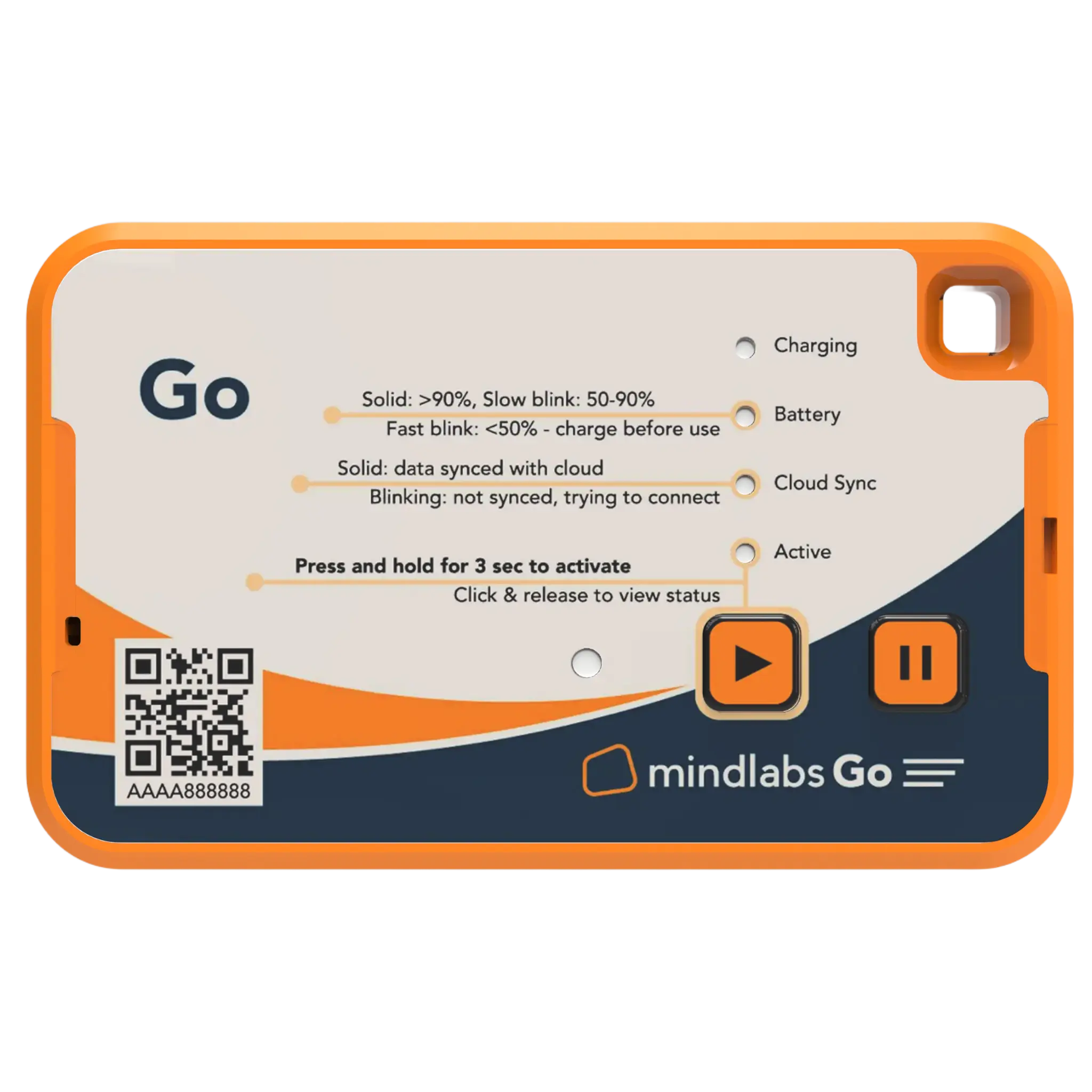
Mindlabs Go is a real-time shipment tracker that travels inside the consignment, monitoring location and condition continuously across every leg of the journey — through the forwarder, the airline, the ground handler, customs, the warehouse, and the last mile.
Instead of reading a logger at the destination and discovering a gap, teams see conditions in real time — so a developing excursion at a handoff surfaces while there's still a window to act, not hours later on a log review. And because the record is continuous and owned by the shipper, there are no blind seams between vendors, and no "it was fine with us" that can't be checked against the data.
Industry Insight
Continuous, in-transit condition data does more than prevent loss. It also protects you: with a complete record, a shipper can disprove an unwarranted damage claim, avoid an unnecessary stability investigation, and make a defensible release decision on arrival — turning the temperature record from a liability into an asset.
What this changes for a supply chain head
Closing the accountability gap isn't only about preventing the next rejected load. It changes your position across the whole operation.
You get one source of truth. Instead of stitching together six vendors' partial records after the fact, you hold a single, continuous record of the entire journey.
You can act, not just document. Real-time visibility means a developing excursion is something you respond to in transit, not something you autopsy on arrival.
You can hold vendors accountable. With an independent, continuous record of what happened on each leg, "it was fine with us" becomes a verifiable claim — and you finally have the data to enforce SLAs and manage lane and carrier risk on evidence, not assertion.
You can prove it to a regulator. A complete, continuous temperature history is exactly what GDP expects — and exactly what closes the "unaccounted interval" finding before it starts.
Key takeaways
You are accountable for the whole chain, but you see it in pieces, because it's owned in pieces. The failures don't happen on the well-run legs; they happen in the seams between vendors — a customs dwell, a delayed put-away, an early offload — where no single party owns the record. When it fails there, every vendor can honestly say "it was fine with us," and the loss, the investigation, and the regulatory answer still land on you. The fix isn't more vendors. It's one continuous record that travels with the shipment, so the whole journey has a single owner: you.
Conclusion
The long haul was never the real risk. The risk is the little gaps in the middle — the handoffs between vendors, where the temperature record breaks and accountability disappears. In a regulatory environment that now treats any unmonitored interval as a potential excursion, and in an industry losing $35 billion a year to these exact failures, "each vendor's leg was fine" is no longer a defensible position. The shipments that quietly go wrong go wrong in the seams. The only way to own the outcome is to own the record — continuously, across every leg, from the moment it ships to the moment it lands.
Wondering how much of your chain is currently unwatched between handoffs? Talk to the Mindlabs team about putting one continuous, GDP-ready record on every shipment — across every vendor and every leg.