Quick answer
To get it right:
- Match the packaging to the product range, such as 2°C to 8°C, 15°C to 25°C, frozen, or dry ice.
- Size it for the worst-case route, not the average one. In India, that means summer road lanes above 40°C, monsoon humidity, and delays at airports and checkposts.
- Qualify it against realistic summer and winter temperature profiles before use.
- Follow a fixed pack-out, with correctly conditioned refrigerants. Wrongly conditioned gel packs that freeze 2°C to 8°C products are the most common failure.
- Monitor every shipment with a temperature data logger, so you can prove the product stayed in range.
On this page
What cold chain packaging is
A shipment is protected in layers:
| Layer | What it is | Example |
|---|---|---|
| Primary | Packaging in direct contact with the product | Vial, prefilled syringe, blister |
| Secondary | Packaging around the primary pack | Carton, tray |
| Tertiary (thermal) | The insulated shipper that controls temperature | EPS box with gel packs, PCM shipper, active container |
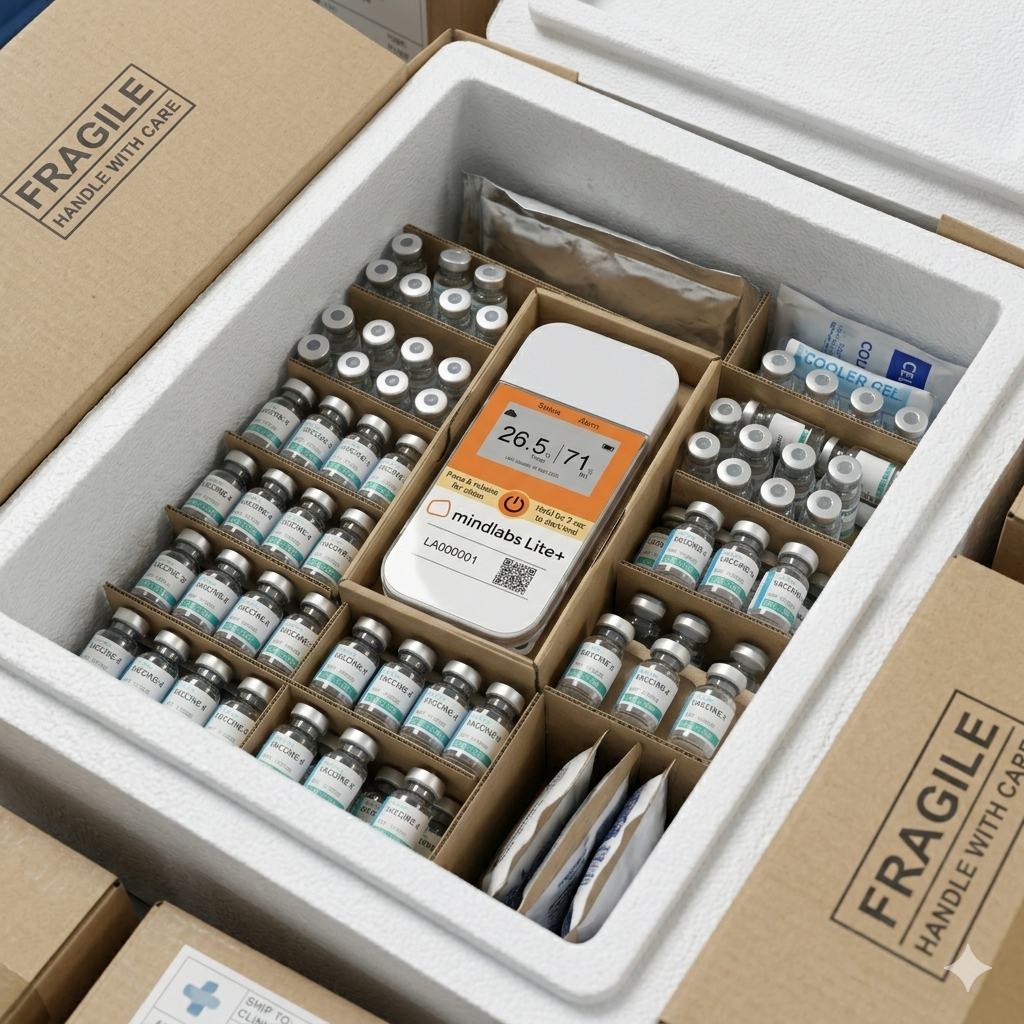
A passive thermal shipper has three core components:
- 1Insulation slows heat moving in or out. Examples are expanded polystyrene (EPS), polyurethane (PUR) and vacuum insulated panels (VIP).
- 2Refrigerant absorbs or releases heat to hold the target temperature. Examples are gel packs, phase change materials (PCMs) and dry ice.
- 3Outer box protects the insulation and carries labels, usually a corrugated carton.
Temperature ranges and what they need
| Range | Typical products | Common refrigerant | Key risk |
|---|---|---|---|
| 2°C to 8°C (refrigerated) | Most vaccines, insulin, biologics, many injectables | Conditioned gel packs or 5°C PCM | Freezing from frozen packs; warming in summer |
| 15°C to 25°C (controlled room temperature) | Many tablets, capsules and liquids sensitive to heat | 20°C PCM or conditioned packs | Overheating in Indian summers |
| -20°C (frozen) | Some vaccines, reagents, biological samples | Frozen gel packs or -20°C PCM | Thawing during delays |
| -70°C to -80°C (dry ice) | Some mRNA vaccines, cell lines, samples | Dry ice (about -78°C) | Sublimation running out; air transport limits on dry ice |
| Below -150°C (cryogenic) | Cell and gene therapies | Liquid nitrogen dry shippers | Specialist handling only |
Active vs passive packaging
| Passive packaging | Active packaging | |
|---|---|---|
| How it works | Insulation plus pre-conditioned refrigerants | Powered unit with its own cooling or heating and thermostat |
| Typical use | Parcels and pallets, domestic and regional routes | High-value air freight, long or complex routes |
| Cost per shipment | Lower | Higher, often rented |
| Duration | Fixed by design, commonly 24 to 120 hours | As long as the battery or power lasts |
| Recovery from excursions | Cannot recover once refrigerant is spent | Can correct temperature during the trip |
| Handling needs | Conditioning space, pack-out station, trained packers | Charged units, return logistics, airline approval |
| Main failure modes | Wrong conditioning, too little refrigerant, extreme ambient | Battery failure, unit malfunction, availability |
Passive packaging covers most pharma shipments in India. Active containers make sense when the value of one lost shipment is higher than the extra cost of the active option, or when the route is too long or unpredictable for passive.
Insulation types
| Insulation | Thermal performance | Weight and size | Cost | Reuse |
|---|---|---|---|---|
| EPS (expanded polystyrene) | Basic | Bulky for longer durations | Lowest | Mostly single-use |
| PUR (polyurethane) | Better than EPS | Thinner walls for the same performance | Medium | Often reusable |
| VIP (vacuum insulated panels) | Highest | Thinnest walls, more payload space | Highest | Reusable when handled carefully |
EPS works for short domestic routes. PUR and VIP are better for longer routes, hotter lanes, and air freight, where volume and weight drive cost.
Refrigerants
Gel packs
Water-based packs that are frozen or chilled before use. They are cheap and widely used. Their main risk is that a pack taken straight from a freezer sits below 0°C and can freeze 2°C to 8°C products placed next to it.
Phase change materials (PCMs)
Materials engineered to melt or freeze at a set temperature, such as 5°C or 20°C. While changing phase, they hold close to that temperature. A 5°C PCM is far less likely to freeze a 2°C to 8°C product than a frozen water pack, which makes PCMs the safer choice for freeze-sensitive products.
Dry ice
Solid carbon dioxide at about -78°C, used for deep-frozen shipments. It sublimates into gas, so shippers must be vented, and air transport of dry ice is subject to dangerous goods rules and quantity limits.
Conditioning
Conditioning means bringing refrigerants to the exact state the packing instruction requires before pack-out:
- Frozen packs held in a freezer for a defined minimum time.
- Conditioned packs taken from the freezer and held at room or chiller temperature until their surface reaches the specified temperature.
- Refrigerated packs held at 2°C to 8°C.
How to choose cold chain packaging
Work through these factors in order.
- 1Product range and sensitivity. Is the product freeze-sensitive, heat-sensitive or both? Freeze-sensitive products need PCMs or carefully conditioned packs.
- 2Route duration. Add realistic delays to the planned transit time: weekend holds, customs, flight changes, checkpost waits. Size for the worst case.
- 3Ambient profile. Indian lanes can see more than 40°C in summer, high humidity in monsoon, and near-freezing nights in northern winters and hill regions. Packaging qualified only for mild conditions will fail.
- 4Payload size. Choose the shipper size that fits the payload with the refrigerant layout it was qualified with. Too much empty space or too much product both change performance.
- 5Mode of transport. Road, air or sea each bring different exposures. Air adds tarmac time and pressure changes; road adds long hours in direct sun.
- 6Handling and return. Can reusable shippers be collected and returned economically? If not, single-use may be cheaper overall.
- 7Cost per shipment. Compare total cost, including refrigerants, conditioning space, labour, returns and the cost of a failed shipment, not just the box price.
Packaging qualification
Qualification is documented proof that a packaging configuration keeps the product in range for the required time under realistic conditions. It is expected under WHO guidance on qualification of shipping containers and supports Schedule M and GDP compliance.
What qualification involves
- 1Define requirements. Product range, payload, duration and the ambient conditions of your routes.
- 2Build thermal profiles. Use summer and winter profiles that reflect your actual lanes. Route data from previous shipments' loggers is the best source; published industry profiles such as those in ISTA standards are a common starting point.
- 3Design the pack-out. Number, type and position of refrigerants, and the minimum and maximum payload.
- 4Test in a chamber. Run the packed shipper through the summer and winter profiles with calibrated loggers placed at the warmest and coldest points of the payload. Test both minimum and maximum load.
- 5Set acceptance criteria. All payload readings stay within range for the required duration, plus a safety margin.
- 6Confirm in real shipments. Run field trials on actual routes with loggers, to confirm chamber results.
- 7Document it. A protocol, report, approved pack-out diagram and packing instruction.
When to re-qualify
Re-qualify when you change the shipper, refrigerant, payload, pack-out, supplier, or route conditions, or when shipment data shows repeated near-misses.
Pack-out best practices
Step-by-step pack-out
- 1Check the packing instruction for the product, shipper and season.
- 2Confirm refrigerants are correctly conditioned and within their time window.
- 3Pre-condition the shipper if required.
- 4Place the bottom refrigerant layer exactly as shown in the pack-out diagram.
- 5Place a spacer or barrier if the design uses one, especially for freeze-sensitive products.
- 6Load the product within the qualified minimum and maximum payload.
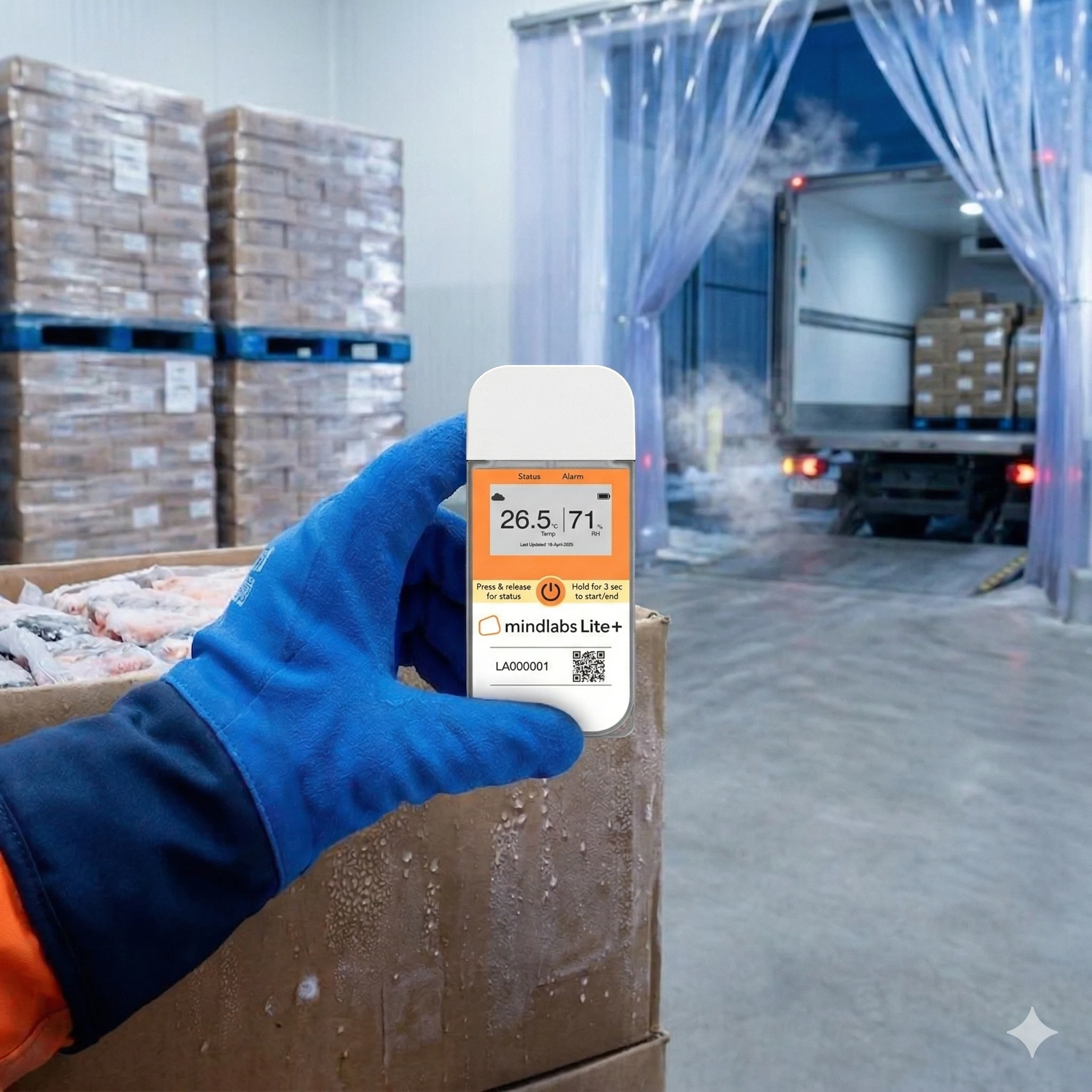
- 7Start a temperature data logger and place it with the product, not touching a refrigerant pack or the shipper wall.
- 8Place the side and top refrigerants as shown.
- 9Close the insulated lid, then seal the outer box.
- 10Label with the storage range, orientation arrows, handling instructions and, for dry ice, the required hazard labels.
- 11Record the pack-out details (shipper type, refrigerant batch and conditioning, logger serial, time) in the packing record.
- 12Move the packed shipper to dispatch within the defined time.
Keep the pack-out diagram visible
Display the approved diagram at the packing station for each configuration and season. Packers should never have to rely on memory.
For the full packing and dispatch procedure, see SOP 5 in Cold Chain SOPs for Pharma.
Common packaging failures and how to prevent them
| Failure | Cause | Prevention |
|---|---|---|
| Product frozen in a 2°C to 8°C shipment | Frozen gel packs placed next to product | Use 5°C PCMs or correctly conditioned packs; add barriers |
| Product warmed above 8°C | Too little refrigerant for summer, or long delays | Qualify with summer profiles; use seasonal pack-outs |
| Excursions only in some boxes | Inconsistent pack-out | Visible diagrams, training, packing checklists |
| Logger shows a false excursion | Logger placed against a refrigerant or wall | Place logger with the product, as qualified |
| Shipper fails on long routes | Duration not sized for real delays | Add realistic delay time to qualification |
| Reused shippers perform worse | Damaged insulation, cracked lids | Inspect reusable shippers and retire damaged ones |
| Dry ice runs out | Under-filled or delayed | Size for worst-case delay; allow for re-icing points |
| Wrong configuration used | Similar-looking boxes and packs | Colour-code or clearly label refrigerants and shippers |
Monitoring shipments
Packaging keeps the product cold; monitoring proves it. Every cold chain shipment should carry at least one of these:
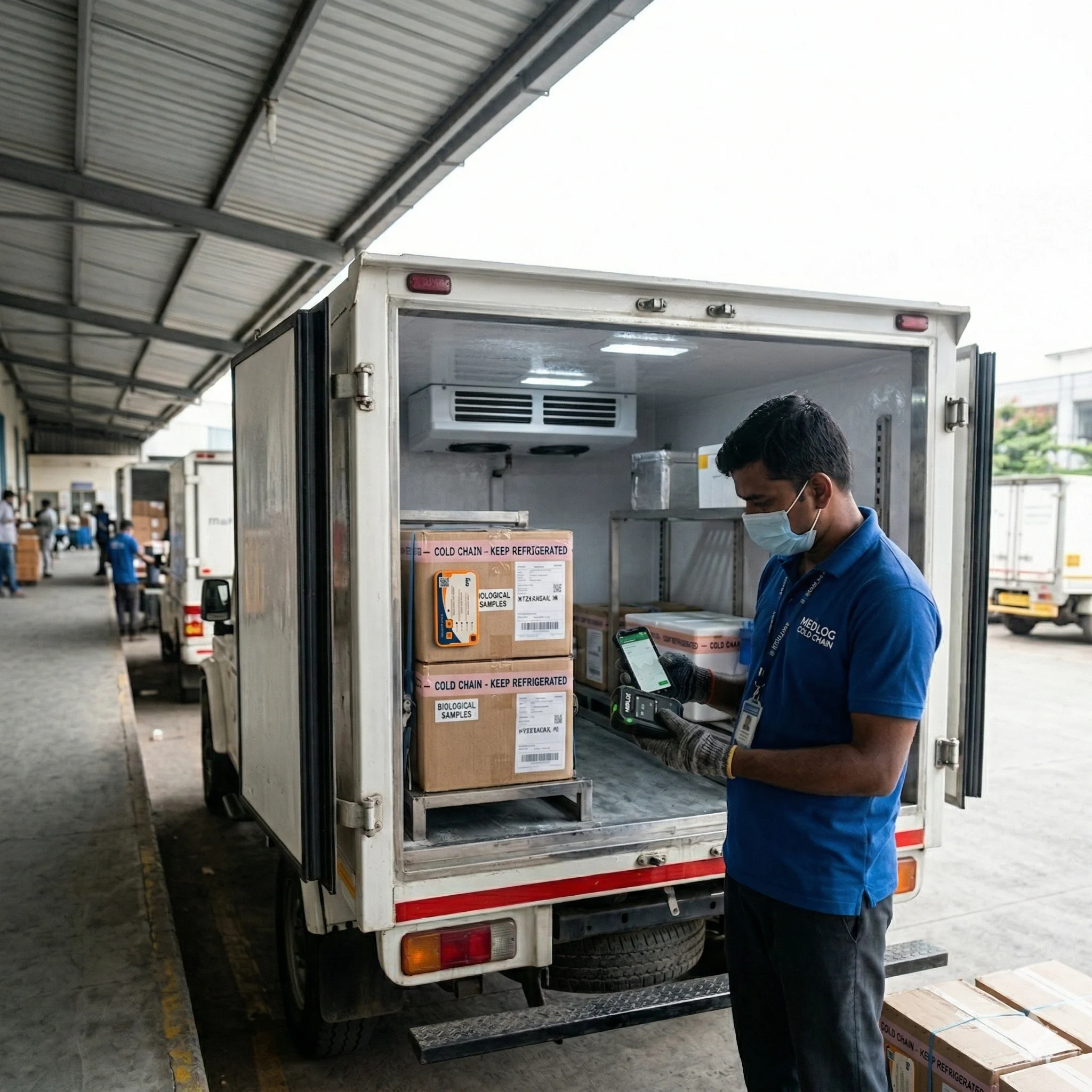
- Single-use USB data logger, which travels with the shipment and produces a PDF report when plugged in at the receiver. Good for routine domestic and export shipments.
- Real-time GPS logger, which sends temperature and location during transit, with alerts if something goes wrong. Good for high-value or long routes where action is still possible.
- Temperature indicators, which show a visible change if a threshold is crossed. Useful as a quick receipt check but not a full record.
Cost and sustainability
| Option | Upfront cost | Per-shipment cost | Waste | Best for |
|---|---|---|---|---|
| Single-use EPS with gel packs | Low | Low to medium | High | Short domestic routes, one-way shipments |
| Single-use PUR or PCM shipper | Medium | Medium | Medium | Longer routes without return logistics |
| Reusable PUR or VIP shipper | High | Low over many trips | Low | Regular routes with reliable returns |
| Rented shippers | None | Medium to high | Low | Variable volumes, export or air freight |
| Active containers (rental) | None | High | Low | High-value, long or complex routes |
Think in cost per successful shipment, including refrigerants, conditioning space and labour, returns, and the cost of failures. A cheaper box that causes one rejected consignment a year is rarely cheaper.
How Mindlabs fits
Mindlabs builds temperature data loggers in Hyderabad for pharma shipments and packaging qualification:
- Lite Plus is a single-use USB logger that travels with the shipment, records for up to 220 days and generates an automatic PDF report on receipt. It is EN 12830 certified and airline approved.
- Go is a real-time GPS logger that tracks temperature, humidity and location in transit, with SMS, email and app alerts, tamper and fall detection, and logging through network gaps.
- Nova is a multi-use logger suited to packaging qualification and chamber testing, storing 85,995 readings with 21 CFR Part 11 compliant reports.
For help choosing a logger, see our guide on how to choose a temperature data logger. For packing and dispatch procedures, see Cold Chain SOPs for Pharma.
Qualifying a shipper or a new lane?
Talk to the team about transit loggers and qualification studies.
FAQs
Official reference documents
- WHO TRS 961, Annex 9: Model guidance for the storage and transport of time- and temperature-sensitive pharmaceutical products
- WHO distribution and storage guidelines, including technical supplements on qualification of shipping containers, transport route profiling, temperature-controlled transport, and monitoring systems for transport
- Revised Schedule M, G.S.R. 922(E), 28 December 2023
- CDSCO homepage for GDP guidelines, notifications and circulars
This guide is for general information. Packaging configurations must be qualified for your own products, routes and seasons before use.