Quick answer
- Who it applies to: every drug manufacturer licensed under the Drugs Rules, 1945, regardless of size.
- Deadlines: large manufacturers (turnover above ₹250 crore) had six months from notification. MSMEs that applied in Form A had until 31 December 2025, so all units are expected to comply from 1 January 2026.
- What inspectors now ask: not "do you have an SOP?" but "can you prove the process, the environment and the data are under control?"
- Where most units fall short: validation, data integrity, and storage and environmental monitoring records.
This guide covers what changed, what each area requires, what inspectors ask to see, and a gap assessment checklist with a 90-day plan you can use straight away.
On this page
What Schedule M is and why it was revised
Schedule M is part of the Drugs Rules, 1945, under the Drugs and Cosmetics Act, 1940. It sets the GMP and facility requirements a manufacturer must meet to hold a drug manufacturing licence in India. State Licensing Authorities and CDSCO inspect against it.
GMP was first written into Schedule M in 1988 and last amended in 2005. A draft revision was published in 2018 (G.S.R. 999(E)), and the final revised Schedule M was notified on 28 December 2023. Its full title changed to "Good Manufacturing Practices and Requirements of Premises, Plant and Equipment for Pharmaceutical Products."
The revision had three drivers:
- Global alignment. Indian GMP had fallen behind WHO GMP and PIC/S expectations, which hurt export credibility.
- Quality failures. Risk-based inspections and contaminated-drug incidents exposed weak quality systems in many units.
- Uneven enforcement. The same rule was being applied very differently across states.
What changed: old vs revised Schedule M
| Area | Old Schedule M (2005) | Revised Schedule M (2023) |
|---|---|---|
| Pharmaceutical Quality System | Not defined | Mandatory PQS with senior management accountability and management review |
| Quality Risk Management | Not defined | Risk assessment, control and review across the product lifecycle |
| Product Quality Review | Not required | Annual PQR for every product, with trend analysis |
| Qualification and validation | Implied, limited detail | Explicit IQ/OQ/PQ for equipment, utilities and premises; process, cleaning and method validation |
| Computerised systems | Limited detail | Validation of GMP-related computerised systems, audit trails, access control |
| Change control and deviations | Limited | Formal change control, deviation handling and CAPA with effectiveness checks |
| Self-inspection and audits | Basic | Self-inspection programme, quality audits, supplier audit and approval |
| Stability | General | Stability studies at conditions for the relevant climatic zone |
| Product-specific sections | 6 categories | 11 categories, adding hazardous products such as hormones, steroids, cytotoxics, biologicals and radiopharmaceuticals |
| Premises | General | Premises to be used only for licensed drug manufacture, with defined flows, segregation and environmental control |
Deadlines and current status
The deadlines depend on turnover, and the MSME timeline changed twice. Here is the sequence of official notifications.
| Date | Notification | What it did |
|---|---|---|
| 5 Oct 2018 | G.S.R. 999(E), draft | Proposed revised Schedule M for public comment |
| 28 Dec 2023 | G.S.R. 922(E), final | Notified revised Schedule M. Large manufacturers (turnover above ₹250 crore): 6 months. MSMEs (₹250 crore or less): 12 months |
| Mid-2024 | — | Deadline for large manufacturers |
| 4 Jan 2025 | Draft notification | Proposed extending the MSME deadline |
| 11 Feb 2025 | G.S.R. 127(E), final | MSMEs that applied in Form A within three months, with a gap analysis and upgrade plan, got until 31 Dec 2025 |
| 1 Jan 2026 | — | All manufacturing units expected to comply |
MSMEs that did not apply for the extension were bound by the original 12-month deadline. In late 2025, industry associations asked for a further extension to December 2026 and the government was reported to be considering it. Check the latest CDSCO notifications before relying on any later date.
Key requirements by area
Revised Schedule M has a general part that applies to all manufacturers, plus product-specific parts. These are the areas every unit must address.
Pharmaceutical Quality System (PQS)
A documented quality system covering quality policy, management review, change control, deviations, CAPA, complaints, recalls and continual improvement. Senior management is accountable for it, and the quality unit must have the authority to stop production.
Quality Risk Management (QRM)
Risks to product quality must be identified, assessed, controlled and reviewed, with the depth of effort matched to the level of risk. QRM should drive decisions such as validation scope, monitoring frequency and how deviations are classified.
Premises
Premises must be used only for licensed manufacturing, designed for a logical flow of materials and people, and built with smooth, cleanable surfaces. Temperature, humidity and pressure differentials must be controlled where products need them, and monitored and recorded.
Equipment, utilities and validation
Equipment and utilities (HVAC, purified water, compressed air) must be qualified through IQ, OQ and PQ, maintained and calibrated on a schedule. Processes, cleaning procedures and analytical methods must be validated, with a validation master plan tying it together.
Documentation and data integrity
Records must follow ALCOA+ principles: attributable, legible, contemporaneous, original, accurate, complete, consistent, enduring and available. Batch records are reviewed by QA, and records are retained for at least one year after product expiry.
Computerised systems
GMP-related computerised systems, including LIMS, ERP, MES and environmental monitoring software, must be validated. They need role-based access, audit trails that QA reviews, backups, and controls over spreadsheets and hybrid paper-electronic records.
Personnel and training
Key personnel (heads of production, QC and QA) must be qualified and appointed. Training must be role-based, recorded and checked for effectiveness, with hygiene and gowning rules enforced.
Product Quality Review (PQR)
Each product must be reviewed annually: batches, deviations, OOS results, complaints, changes, stability data and returns. The review must lead to actions, not just a compiled report.
Schedule M for storage and environmental monitoring
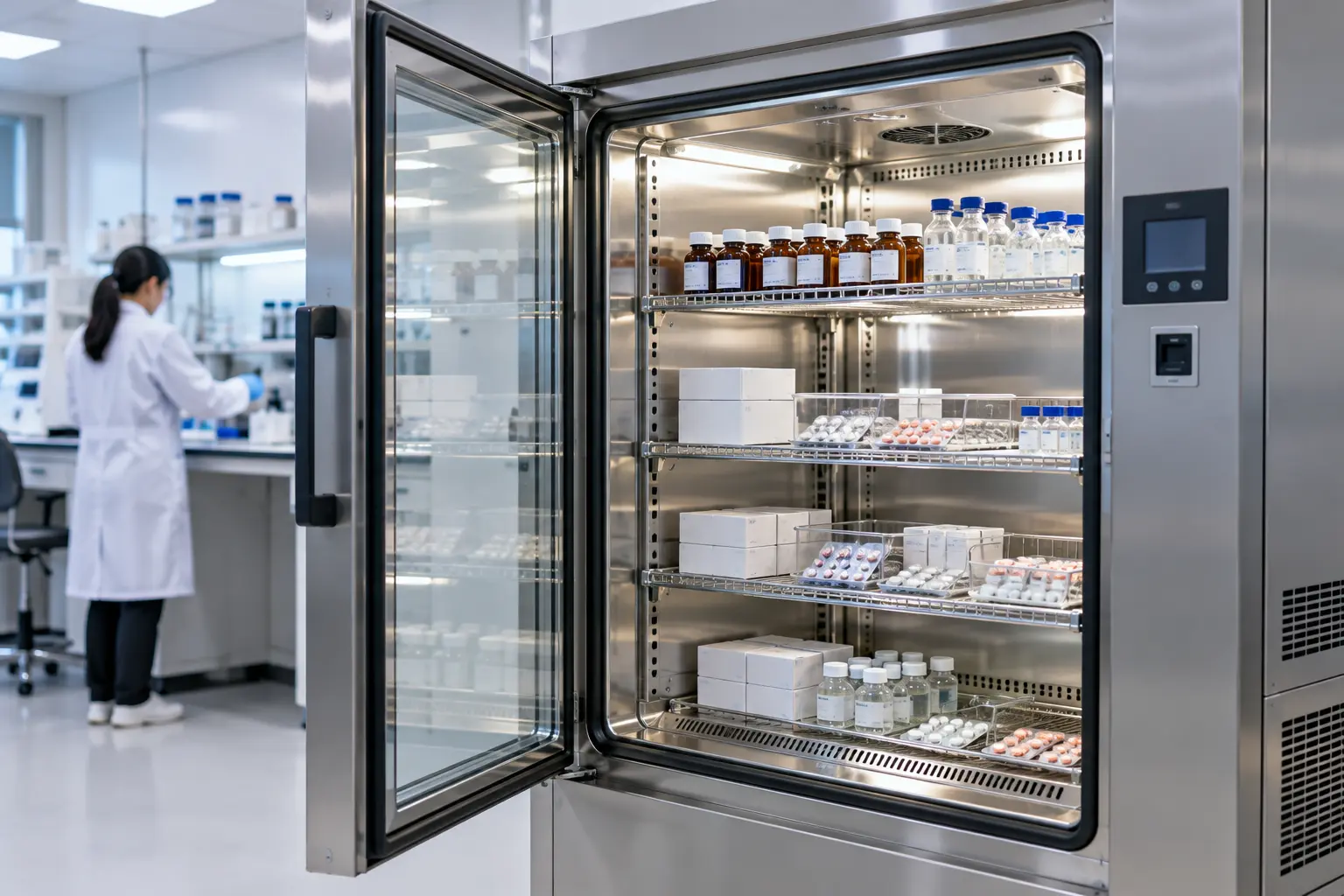
Storage and monitoring are where many units fail inspections, because the evidence is spread across logbooks, chart papers and spreadsheets. Revised Schedule M expects storage conditions to be defined, controlled, monitored, recorded and reviewed, with the same data-integrity rules that apply to batch records.
Where monitoring applies
| Area | Typical condition | What to monitor | Evidence inspectors check |
|---|---|---|---|
| Raw material and finished goods warehouse | Controlled room temperature, often ≤25°C or ≤30°C with RH limits | Temperature and RH at mapped hot and cold spots | Mapping report, continuous records, excursion log |
| Cold rooms and refrigerators | 2°C to 8°C | Temperature, door openings, power failure | Mapping, alarm tests, calibration certificates |
| Freezers | -20°C or below | Temperature with external probe | Continuous records, alarm history |
| QC laboratory | Room conditions plus sample and reagent storage | Temperature and RH; fridges for standards | Records linked to instrument and sample logs |
| Stability chambers | ICH or zone-specific conditions, such as 30°C / 75% RH | Temperature and RH, independent of chamber controller | Chamber qualification, independent monitoring, excursion impact assessments |
| Cleanrooms and production areas | Defined temperature, RH and pressure differential | Temperature, RH, differential pressure | Trend reports, alarm limits, deviations |
What good practice looks like
- 1Define conditions for each area from product labels and stability data, not habit.
- 2Map each storage area before use, after major changes, and periodically, covering summer and winter and empty and loaded states.
- 3Place monitoring sensors at the hot and cold spots the mapping found.
- 4Monitor continuously with alarms, escalation and power-failure backup, rather than twice-daily manual readings.
- 5Calibrate sensors against traceable or accredited standards at points that bracket the range.
- 6Validate the monitoring software and keep audit trails, access control and backups.
- 7Handle excursions as deviations, with impact assessment, root cause and CAPA.
- 8Review trends in the PQR and management review, not only when an alarm fires.
The WHO technical supplements on temperature mapping, qualification of storage areas and monitoring systems are the most practical reference for how to do each of these. For device selection, see our guide on how to choose a temperature data logger.
What inspectors ask to see
Inspectors under revised Schedule M follow evidence, so have these documents current, approved by QA and retrievable within minutes.
| Area | Documents and records |
|---|---|
| Quality system | Quality manual, quality policy, site master file, management review minutes |
| Risk management | Risk assessments for critical processes, utilities and storage, with review dates |
| Change and deviations | Change control log, deviation log, CAPA log with effectiveness checks |
| Validation | Validation master plan; IQ/OQ/PQ reports for equipment, utilities and storage areas; process, cleaning and method validation |
| Storage and monitoring | Temperature mapping reports, continuous monitoring records, alarm test records, excursion investigations |
| Calibration | Calibration schedule and certificates for every critical instrument and sensor |
| Computerised systems | System inventory, CSV documents, user access lists, audit trail review records, backup records |
| Production | SOPs, batch manufacturing and packaging records, line clearance, cleaning logs |
| QC | Specifications, test records, OOS/OOT investigations, stability protocols and data |
| People | Organogram, job descriptions, training matrix and records, medical fitness records |
| Product | PQRs, complaints, recalls, returns, self-inspection and supplier audit reports |
Checklist
Revised Schedule M Compliance Checklist (Gap Assessment)
A Schedule M gap assessment compares your current practices and records against each requirement of revised Schedule M to find what is missing before an inspection does.
Use this revised Schedule M compliance checklist to run a gap assessment of your facility, area by area. It covers the quality system, premises, storage and environmental monitoring, validation, data integrity, computerised systems and personnel, which are the areas CDSCO and State inspectors check most closely. Tick an item only when the evidence exists and is current, not when it is planned. Every unticked item goes on your remediation plan.
0 / 41 items ticked
Quality system and risk management
0/7Premises and utilities
0/5Storage and environmental monitoring
0/8Equipment, calibration and validation
0/6Documentation and data integrity
0/4Computerised systems
0/6Personnel
0/3Product-specific
0/2Plan
90-day Schedule M compliance plan
This plan suits a unit that has the basics in place but has not yet closed its revised Schedule M gaps. Major civil or HVAC work will take longer; start those in week 1 and run them in parallel.
| Weeks | Phase | What to do | Output |
|---|---|---|---|
| 1–2 | Gap assessment | Run the checklist above area by area with QA, production, engineering and stores. Trace two batches end to end | Gap list with owners |
| 3–4 | Risk-ranked plan | Rank gaps by product risk and inspection likelihood. Fix data integrity, validation and storage gaps first | Approved remediation plan and budget |
| 5–8 | Remediation | Write or revise SOPs, complete mapping and qualification, install continuous monitoring, close calibration gaps, set up audit trail review | Closed gaps with evidence |
| 9–10 | Validation and training | Complete IQ/OQ/PQ and CSV for new systems; train staff on revised SOPs and check effectiveness | Signed validation reports, training records |
| 11–12 | Mock inspection | Have someone outside the team run a mock inspection against Schedule M; raise CAPA for every finding | Mock inspection report, CAPA log |
After day 90, keep the gains with quarterly self-inspections, monthly trend review of environmental data, and management review.
Common gaps and how to fix them
| Gap | Why it matters | Fix |
|---|---|---|
| Manual twice-daily temperature logbooks | Nothing recorded between readings; entries easy to backfill | Continuous monitoring with alarms and audit trail |
| Storage areas never mapped | Sensors may sit away from the worst-case spot | Map each area in summer and winter, then place sensors at hot and cold spots |
| Calibration certificates at the wrong points | Certificate does not prove accuracy in the use range | Calibrate at points that bracket the range, with as-found and as-left data |
| Excursions noted but not investigated | Product impact never assessed | Treat every excursion as a deviation with impact assessment and CAPA |
| Shared logins on systems | Records are not attributable | Unique user IDs, role-based access, audit trail review |
| Spreadsheets used for GMP calculations | Uncontrolled, editable, no audit trail | Lock and validate, or move to a validated system |
| Stability chamber monitored only by its own controller | No independent evidence if the controller fails | Add an independent calibrated sensor with alarms |
| PQR compiled but not reviewed | Trends and repeat failures are missed | Make PQR an action-driven review with management sign-off |
| CAPA closed without effectiveness checks | The same issue comes back | Define an effectiveness check and date for each CAPA |
| Training records without assessment | No proof staff understood the SOP | Add short competency checks after training |

How Mindlabs helps with Schedule M compliance
Mindlabs builds temperature and humidity monitoring in Hyderabad for pharma storage, cleanrooms, stability areas and cold chain. It covers the storage and monitoring part of your gap list:
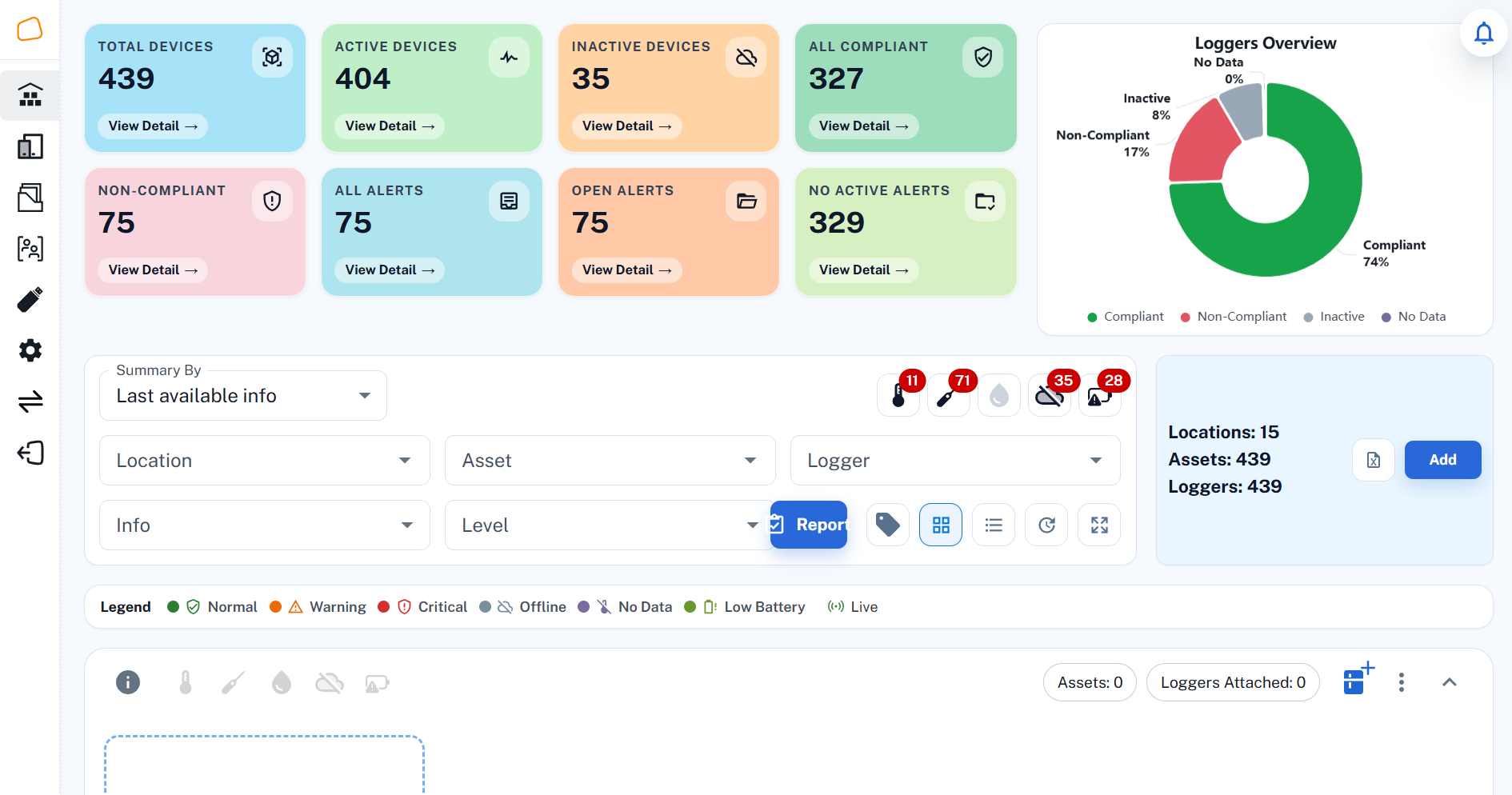
- Continuous monitoring with alarms: Anchor monitors warehouses, cold rooms, freezers and chambers over 4G or Wi-Fi, with SMS, email and app alerts and a 1-year battery for power cuts.
- Temperature mapping: Nova is a multi-use logger for mapping and qualification studies, storing 85,995 readings.
- Data integrity: 21 CFR Part 11 compliant records with audit trails, access control and tamper-proof reports, plus CSV documentation to support validation.
- Calibration: every logger ships with a calibration certificate.
Closing your storage and monitoring gaps?
Talk to the team about monitoring and mapping for your facility.
FAQs
Official reference documents
Read the primary documents rather than summaries when making compliance decisions.
Indian regulations
- Revised Schedule M, G.S.R. 922(E), 28 December 2023 (Puducherry Drugs Control page hosting the gazette PDF)
- Revised Schedule M gazette text (PDF copy)
- Schedule M, Drugs and Cosmetics Act 1940 and Rules 1945 (CDSCO)
- CDSCO homepage for notifications and circulars
- Pharmexcil circular on the MSME extension, G.S.R. 127(E), 11 February 2025
WHO guidance
News sources for deadlines
This guide is for general information and is not legal advice. Check the latest CDSCO notifications for current requirements.