Quick answer
Every pharma manufacturer, distributor, C&F agent, hospital pharmacy or clinic handling cold chain products needs at least these 10 SOPs:
- 1.Receipt and inspection of cold chain goods
- 2.Storage in cold rooms and refrigerators
- 3.Temperature monitoring and alarm response
- 4.Temperature excursion management
- 5.Packing and dispatch
- 6.Transport and reefer vehicle management
- 7.Temperature mapping and qualification
- 8.Calibration of monitoring devices
- 9.Power failure and equipment breakdown
- 10.Cleaning, defrosting and maintenance
This guide explains how to write them and gives a sample for each, which you can adapt to your site.
On this page
Why cold chain SOPs matter
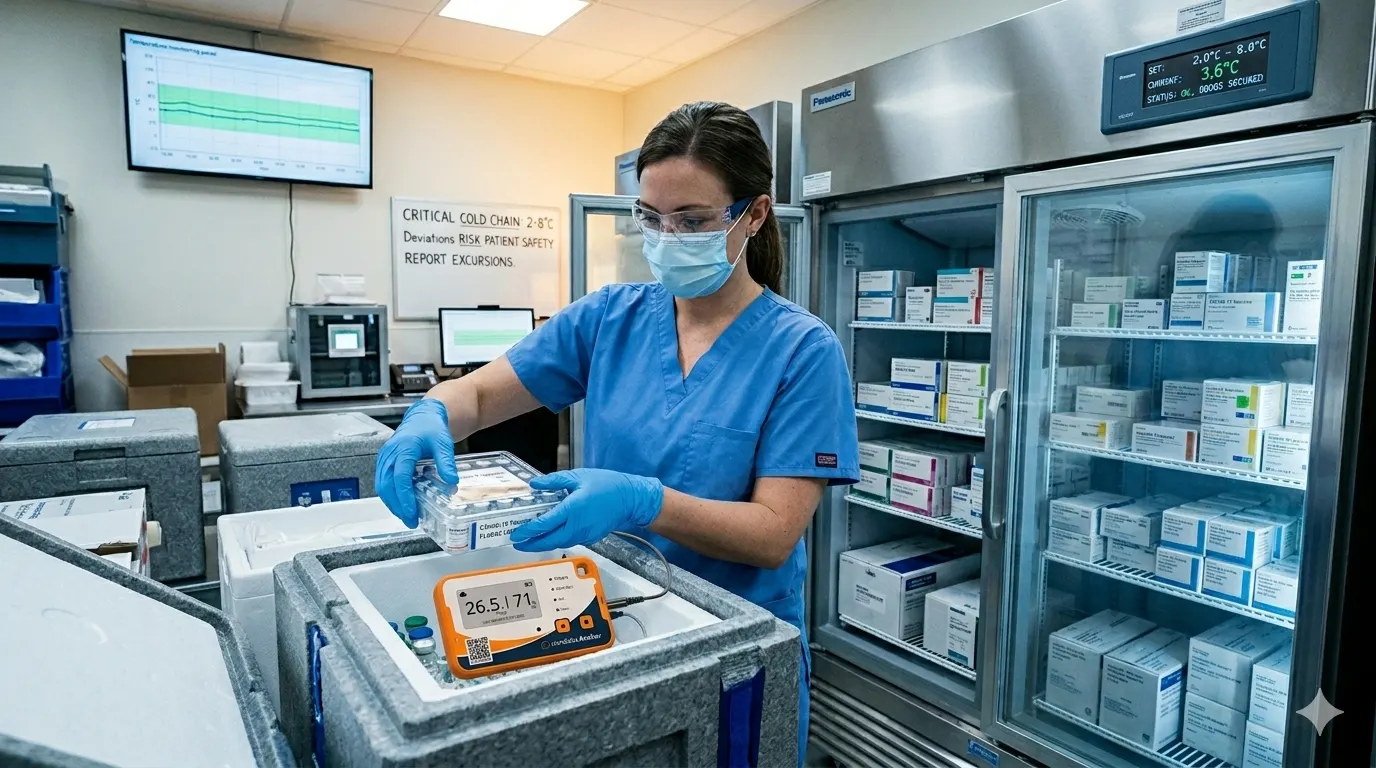
Cold chain products, such as vaccines, insulin, biologics and many injectables, lose potency or become unsafe when they go outside their labelled range. The damage is often invisible: a frozen vaccine or a warmed insulin vial looks the same as a good one.
SOPs are how you prove control. In India, they are expected under:
- Revised Schedule M (G.S.R. 922(E), 2023), which requires defined, monitored and recorded storage conditions, deviation handling and documented procedures for every GMP activity. See our Revised Schedule M Compliance Guide.
- CDSCO Good Distribution Practices, which extend storage and transport expectations to distributors and warehouses.
- WHO TRS 961, Annex 9, the model guidance for storing and transporting time- and temperature-sensitive pharmaceutical products, which most Indian regulators and export customers use as the reference.
How to write a cold chain SOP
Use the same structure for every SOP so staff can find information quickly and QA can review them consistently.
| Section | What it contains |
|---|---|
| Header | SOP title, number, version, effective date, review date, page numbers |
| Purpose | One or two sentences on what the SOP achieves |
| Scope | Which products, areas, equipment and sites it covers |
| Responsibilities | Who does what, by role, not by name |
| Definitions | Terms such as excursion, quarantine, mean kinetic temperature |
| Procedure | Numbered steps in the order they happen |
| Records | Forms and logs to fill, and where they are kept |
| References | Related SOPs and regulations |
| Revision history | What changed in each version and why |
| Approval | Prepared by, reviewed by, approved by (QA), with signatures and dates |
Five rules for writing them well:
- 1Write for the person doing the task. Use short, numbered steps and plain words.
- 2Be specific. "Check temperature" is vague. "Read the display and record the current, minimum and maximum temperature in Form CC-02 at 09:00 and 17:00" is clear.
- 3Say what to do when things go wrong, not just the normal path.
- 4Match reality. If staff cannot follow a step on a busy day, change the step or the resources, not just the training.
- 5Link records to steps. Every step that needs evidence should name the form.
Sample templates
The 10 essential cold chain SOPs
The samples below are starting points. Replace bracketed text with your own details, align them with your product labels, and have QA approve them before use.
SOP 1: Receipt and inspection of cold chain goods
- Purpose
- To ensure cold chain products are received within their required temperature range and moved into correct storage without delay.
- Scope
- All incoming temperature-sensitive products at [site name].
- Responsibilities
- Stores personnel receive and inspect; QA reviews temperature data and decides on any excursion.
Procedure
- 1Prioritise cold chain consignments over all other receipts.
- 2Check the vehicle or shipper on arrival: seal intact, no visible damage, refrigeration unit running (for reefers).
- 3Verify the delivery documents against the purchase order: product, batch, quantity, expiry and storage condition.
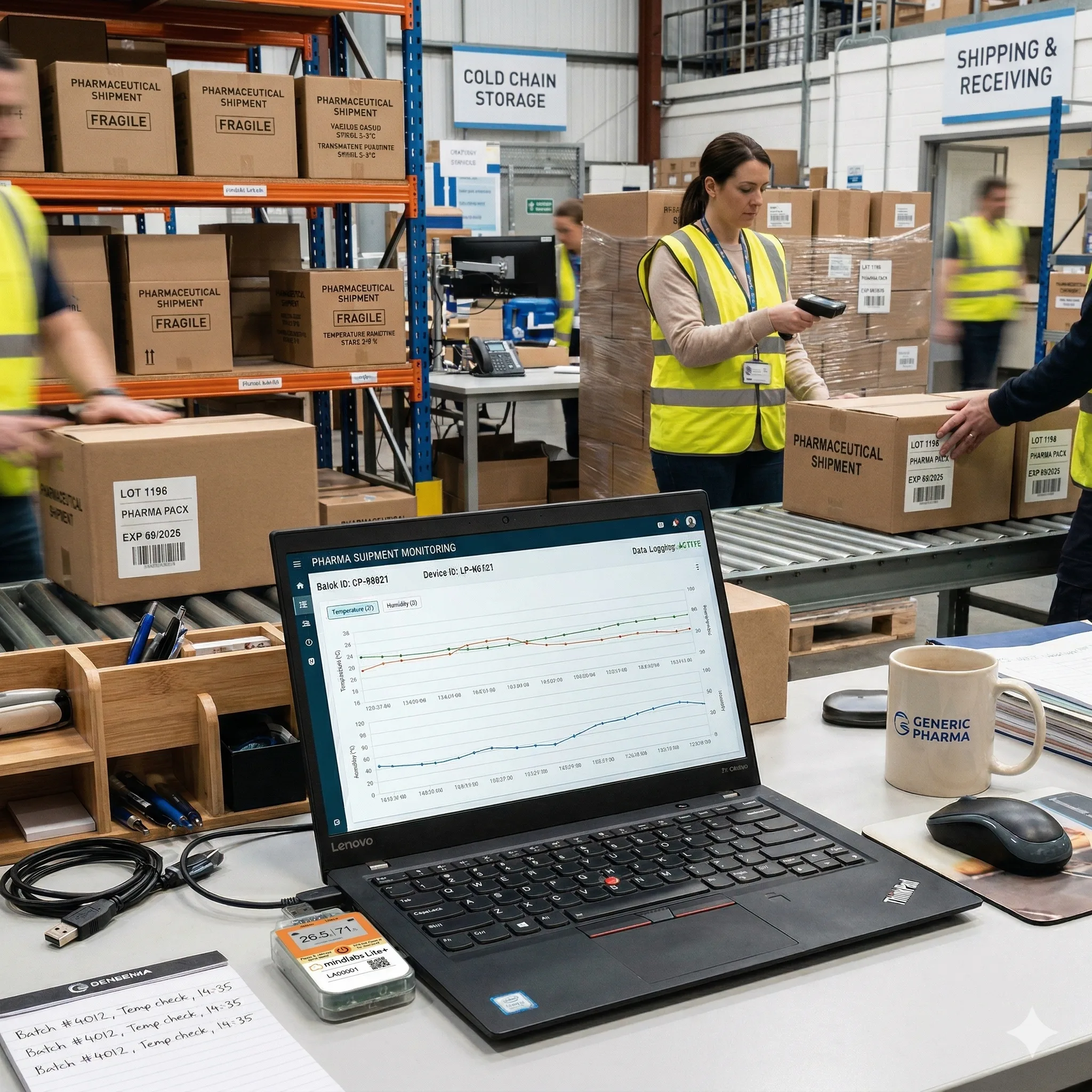
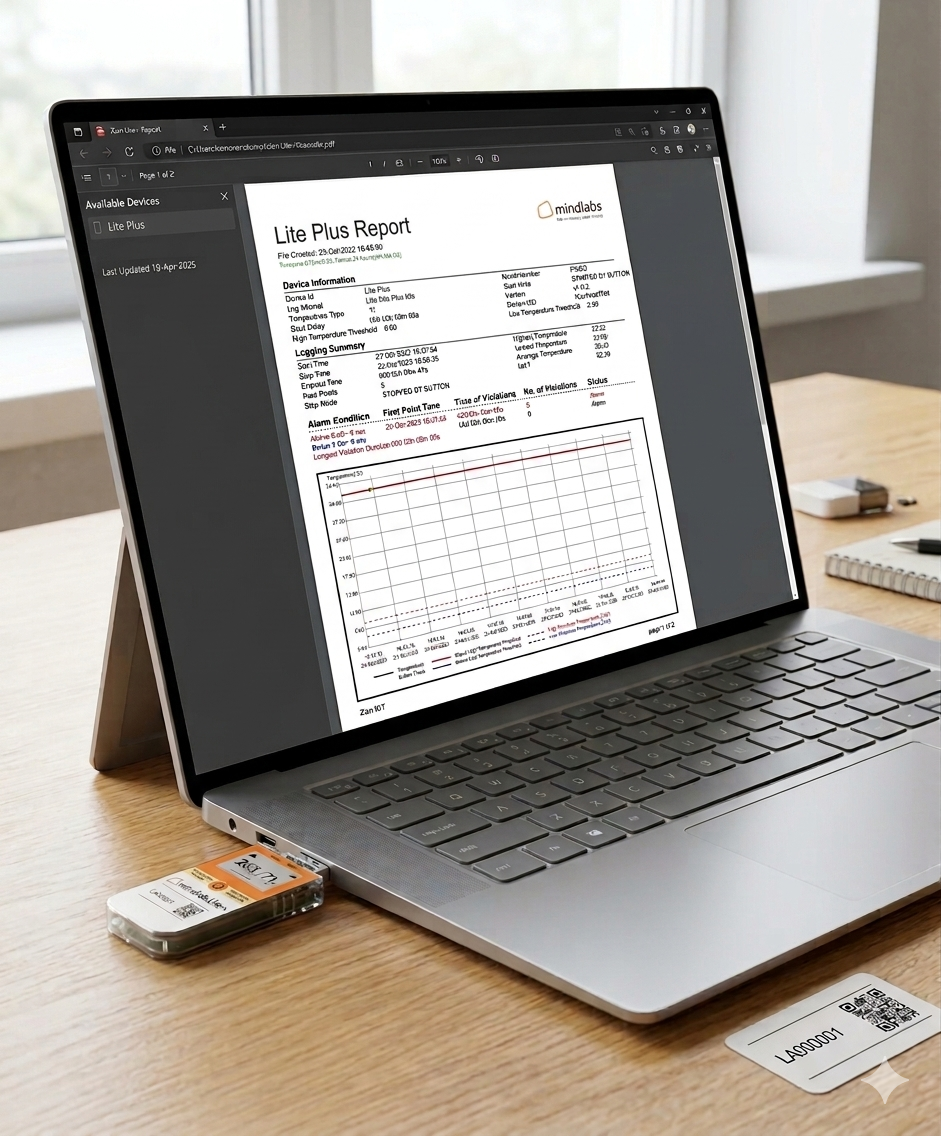
- 4Retrieve the shipment's temperature data logger. Stop it and download or view the record.
- 5Check the record for any reading outside the labelled range during transit.
- 6If no excursion: move goods into the designated cold storage within [15] minutes of opening the shipper.
- 7If an excursion is found, or the logger is missing or damaged: place goods in a quarantine area within the correct cold storage, label "Quarantine – do not use", and inform QA immediately (follow SOP 4).
- 8Check vaccine vial monitors (VVMs) or temperature indicators where present.
- 9Record the receipt in Form CC-01 and attach the logger report.
Records: Form CC-01 Cold chain receipt record; logger report; GRN.
SOP 2: Storage in cold rooms and refrigerators
- Purpose
- To store cold chain products under conditions that keep them within their labelled range.
- Scope
- All cold rooms, pharmaceutical refrigerators and freezers at [site name].
- Responsibilities
- Stores personnel; area in-charge for daily checks.
Procedure
- 1Store products only in qualified, mapped equipment with a calibrated monitoring sensor.
- 2Use only pharmaceutical-grade refrigerators. Domestic refrigerators are not permitted.
- 3Do not store products in door shelves, against the back wall, near the evaporator, or on the floor.
- 4Leave space between stacks and walls for air circulation, as defined in the mapping report.
- 5Store products by FEFO (first expiry, first out). Keep labels visible.
- 6Segregate quarantined, rejected and returned stock in clearly labelled areas.
- 7Do not store food, drinks or non-pharmaceutical items in cold chain equipment.
- 8Keep door openings short and infrequent. Plan picking to avoid repeated openings.
- 9Keep freeze-sensitive products away from cold spots identified in mapping.
Records: Stock register; mapping report reference for each unit.
SOP 3: Temperature monitoring and alarm response
- Purpose
- To continuously monitor storage temperatures and respond to alarms before products are affected.
- Scope
- All monitored cold chain storage at [site name].
- Responsibilities
- Area in-charge for daily review; designated alarm responders (including after hours); QA for review and trending.
Procedure
- 1Each storage unit has a calibrated, continuously recording sensor placed at the location defined by mapping.
- 2Set alarm limits: [high and low alarm limits, e.g. 3°C and 7°C for a 2°C to 8°C unit] with a delay of [10–15] minutes to avoid false alarms from door openings.
- 3Configure alerts by SMS, email and app to at least two responders, with escalation to [QA head / site head] if not acknowledged within [15] minutes.
- 4Daily: review the monitoring dashboard or display at [time], and record current, minimum and maximum readings in Form CC-02 (or confirm in the system).
- 5On an alarm: the responder acknowledges it, checks the unit within [15] minutes, and identifies the cause (door open, power, compressor, sensor).
- 6Take immediate corrective action: close the door, restore power, or move products to backup storage (SOP 9).
- 7If the reading went outside the product's labelled range, start SOP 4.
- 8Record every alarm, cause and action in Form CC-03.
- 9Test alarms [quarterly] by simulating a high and low condition. Record results in Form CC-04.
- 10QA reviews monitoring data and alarm logs [monthly] for trends.
Records: Form CC-02 Daily temperature review; Form CC-03 Alarm log; Form CC-04 Alarm test record; system audit trail.
SOP 4: Temperature excursion management
- Purpose
- To assess and decide on products exposed to temperatures outside their labelled range.
- Scope
- Excursions in storage, receipt or transport at [site name].
- Responsibilities
- Person who detects the excursion reports it; QA investigates and decides product disposition.
Procedure
- 1Immediately protect the product: move it to correct storage and quarantine it. Do not discard anything yet.
- 2Report the excursion to QA within [1] hour using Form CC-05.
- 3Record: unit, products and batches affected, start and end time, minimum or maximum temperature, and total duration outside range.
- 4Download and attach the full temperature record.
- 5QA assesses the impact using the manufacturer's stability data or excursion guidance. Contact the manufacturer where needed.
- 6Check freeze-sensitive products for freezing, including a shake test where applicable and validated.
- 7QA decides disposition: release, release with restrictions, or reject.
- 8Raise a deviation and investigate root cause.
- 9Raise CAPA to prevent recurrence and set an effectiveness check.
- 10Notify customers or the marketing authorisation holder where product already dispatched may be affected.
Decision flow
| Step | Question | If yes | If no |
|---|---|---|---|
| 1 | Was the product outside its labelled range? | Go to step 2 | No excursion; record alarm only |
| 2 | Is stability data available for this exposure? | Go to step 3 | Contact manufacturer; keep quarantined |
| 3 | Is the exposure within the stability allowance? | Release with QA approval; record | Reject and destroy per SOP |
| 4 | For freeze-sensitive products, was the product frozen? | Reject | Continue assessment |
Records: Form CC-05 Excursion report; deviation; CAPA; disposition decision.
SOP 5: Packing and dispatch
- Purpose
- To pack cold chain products so they stay within range for the full journey.
- Scope
- All cold chain dispatches from [site name].
- Responsibilities
- Dispatch personnel pack; QA approves packing configurations.
Procedure
- 1Use only qualified shipper and packing configurations, matched to route duration and season.
- 2Condition gel or ice packs as specified in the packing instruction, for example [2°C to 8°C conditioned packs for 2°C to 8°C products]. Never place frozen packs directly against freeze-sensitive products.
- 3Pre-condition the shipper if the packing instruction requires it.
- 4Pack products, coolants and a started temperature logger exactly as shown in the packing diagram.
- 5Place the logger with the product, not against a coolant pack or the box wall.
- 6Seal the shipper and label it with storage condition, "Keep refrigerated" or equivalent, and orientation arrows.
- 7Record packing time, shipper type, number of coolant packs and logger serial number in Form CC-06.
- 8Hand over to the transporter only when the vehicle and dispatch timing are confirmed.
- 9Pack in the cold area or as close to it as possible, and limit time at ambient temperature to [defined minutes].
Records: Form CC-06 Packing record; logger serial number; dispatch documents.
SOP 6: Transport and reefer vehicle management
- Purpose
- To keep products within range during transport.
- Scope
- Own fleet and contracted transporters carrying cold chain products.
- Responsibilities
- Logistics in-charge; transporters under a quality agreement.
Procedure
- 1Use only qualified vehicles or transporters approved by QA under a quality agreement.
- 2Pre-cool the reefer to the set point before loading, and record the temperature.
- 3Load quickly, without blocking airflow from the refrigeration unit.
- 4Monitor temperature throughout the journey with a calibrated logger. Use real-time GPS loggers for high-value or long routes.
- 5Drivers must not switch off refrigeration during stops and must keep doors closed except for loading and unloading.
- 6If an alert is received in transit, the driver and logistics in-charge follow the contingency plan: check the unit, divert to a backup cold store, or transfer to another vehicle.
- 7Record any delay, breakdown or alert in Form CC-07.
- 8On delivery, the receiver checks the logger data (SOP 1).
- 9Qualify routes by profiling summer and winter conditions for long or high-risk lanes.
Records: Form CC-07 Transport log; logger reports; vehicle qualification records.
SOP 7: Temperature mapping and qualification
- Purpose
- To demonstrate that storage areas and equipment maintain the required temperature throughout, and to identify where monitoring sensors should be placed.
- Scope
- Cold rooms, refrigerators, freezers and controlled storage areas.
- Responsibilities
- Engineering and QA; validation team or approved contractor.
Procedure
- 1Prepare a mapping protocol defining the area, logger number and positions (a 3D grid covering corners, centre, top, bottom, doors and near cooling units), logging interval, duration and acceptance criteria.
- 2Use calibrated loggers with valid certificates.
- 3Map empty and loaded states, and summer and winter conditions where ambient affects performance.
- 4Run the study for a duration that captures normal operation, defrost cycles and door openings, typically several days.
- 5Include tests such as door opening and power-off recovery where relevant.
- 6Analyse results: identify hot and cold spots, check all points stayed within limits, and calculate recovery time after door openings.
- 7Write a mapping report with conclusions and approved monitoring sensor locations.
- 8Re-map after major changes (equipment, layout, racking) and at a defined frequency, for example every [2–3] years or as risk assessment requires.
Records: Mapping protocol; mapping report; logger calibration certificates.
SOP 8: Calibration of monitoring devices
- Purpose
- To ensure temperature sensors and loggers read accurately.
- Scope
- All sensors, loggers and thermometers used for cold chain monitoring and mapping.
- Responsibilities
- Engineering or metrology; QA for review.
Procedure
- 1Maintain a list of all monitoring devices with serial numbers, locations and calibration due dates.
- 2Calibrate each device at least [annually], or more often for critical uses or devices with a history of drift.
- 3Use a calibration laboratory accredited to ISO/IEC 17025 (NABL in India), or traceable to national standards as defined by QA.
- 4Calibrate at points that bracket the use range. For 2°C to 8°C, use points around 0°C, 5°C and 10°C.
- 5Review each certificate on receipt: serial number match, points, as-found and as-left readings, uncertainty, and pass or fail against your acceptance limit.
- 6If a device is found out of tolerance (as-found), assess the impact on all data recorded since the last calibration and raise a deviation.
- 7Replace devices sent for calibration with calibrated spares so no location goes unmonitored.
- 8Label each device with its calibration status and due date.
Records: Calibration schedule; certificates; out-of-tolerance impact assessments.
SOP 9: Power failure and equipment breakdown
- Purpose
- To protect products when power fails or cold chain equipment breaks down.
- Scope
- All cold chain storage at [site name].
- Responsibilities
- Area in-charge; engineering; alarm responders; QA.
Procedure
- 1Connect critical cold chain equipment to backup power (generator or UPS) where available, and test it [monthly].
- 2Monitoring devices must have battery backup so they keep recording and alerting during a power cut.
- 3On power failure: keep doors closed. A closed, well-loaded unit holds temperature longer.
- 4Confirm the backup supply starts. If not, inform engineering immediately.
- 5If power is not restored within [defined time] or the temperature approaches the alarm limit, move products to designated backup storage (another qualified unit, cold room or conditioned shippers).
- 6For equipment breakdown, follow the same transfer steps and raise a maintenance request.
- 7Record the event, duration, actions and temperatures in Form CC-08.
- 8If any product went outside range, follow SOP 4.
- 9Keep an emergency contact list (engineering, service vendor, backup storage, QA) posted on every cold chain unit.
Records: Form CC-08 Power failure and breakdown log; generator test records.
SOP 10: Cleaning, defrosting and maintenance
- Purpose
- To keep cold chain equipment clean and working reliably without exposing products to excursions.
- Scope
- Cold rooms, refrigerators and freezers.
- Responsibilities
- Stores personnel for cleaning; engineering or service vendor for maintenance.
Procedure
- 1Clean equipment at a defined frequency, for example [monthly] for refrigerators.
- 2Before cleaning or defrosting, move products to qualified backup storage and monitor them.
- 3Switch off and defrost as per the manufacturer's instructions where manual defrosting is needed.
- 4Clean with approved, non-residual cleaning agents. Dry fully.
- 5Switch on and allow the unit to return to its range, confirmed on the monitoring display, before returning products.
- 6Record the activity in Form CC-09.
- 7Carry out preventive maintenance as scheduled: condenser cleaning, door gasket check, refrigerant and compressor checks.
- 8After major repairs, assess whether re-qualification or re-mapping is needed (SOP 7).
Records: Form CC-09 Cleaning and defrost log; preventive maintenance records.
Supporting SOPs
These are often separate SOPs or part of your wider quality system, but cold chain areas depend on them.
| SOP | Key points |
|---|---|
| Training in cold chain handling | Initial and refresher training for all handlers, with assessment; retraining after SOP changes |
| Returns and recalls of cold chain products | Returned stock is quarantined until temperature history is verified; products without proof of cold chain are not returned to saleable stock |
| Monitoring data review and record retention | Periodic QA review of data and trends; audit trail review; retention for the defined period after product expiry |
| Vendor and transporter qualification | Quality agreements, audits and performance review for logistics partners |
| Deviation and CAPA | Links excursion handling to the site's deviation and CAPA system |
Records and forms checklist
Each SOP should name its forms. A typical cold chain form set:
| Form | Used in | Purpose |
|---|---|---|
| CC-01 Cold chain receipt record | SOP 1 | Receipt checks and logger result |
| CC-02 Daily temperature review | SOP 3 | Current, min and max readings or system review sign-off |
| CC-03 Alarm log | SOP 3 | Every alarm, cause and action |
| CC-04 Alarm test record | SOP 3 | Periodic alarm function tests |
| CC-05 Excursion report | SOP 4 | Details, assessment and disposition |
| CC-06 Packing record | SOP 5 | Shipper, coolants, logger serial |
| CC-07 Transport log | SOP 6 | Journey events and alerts |
| CC-08 Power failure and breakdown log | SOP 9 | Event, duration, actions |
| CC-09 Cleaning and defrost log | SOP 10 | Cleaning and defrost activity |
Common SOP mistakes inspectors flag
- 1The SOP describes an ideal, not what happens. Staff follow a different practice that is not written down.
- 2No after-hours alarm response. Alerts go to one person, or to an office phone nobody answers at night.
- 3Excursions recorded but not assessed. Products are released without a documented QA decision.
- 4Generic SOPs copied from another site. They name equipment, forms or roles that do not exist.
- 5No link to mapping. Sensor locations are not based on the mapping report.
- 6Calibration out-of-tolerance results ignored. No impact assessment on past data.
- 7Domestic refrigerators in use despite the SOP saying otherwise.
- 8Overdue SOP reviews and training records that do not match the current version.
SOP review and training cadence
| Activity | Frequency |
|---|---|
| SOP review | Every [2–3] years, or sooner after an incident, audit finding, regulation change or equipment change |
| Training on new or revised SOPs | Before the effective date |
| Refresher training for handlers | At least annually |
| Mock excursion or alarm drill | At least annually, including after-hours response |
| QA review of monitoring data and alarm logs | Monthly |
How Mindlabs fits into your cold chain SOPs
Several SOPs above depend on reliable monitoring data. Mindlabs devices are built to support them:
- SOP 3 and 9: Anchor provides continuous monitoring over 4G or Wi-Fi with SMS, email and app alerts, escalation, and a 1-year battery that keeps it recording through power cuts.
- SOP 1, 5 and 6: Go tracks temperature and GPS in transit with live alerts, and Lite Plus is a single-use USB logger with an automatic PDF report on receipt.
- SOP 7: Nova is a multi-use logger for temperature mapping and qualification studies.
- Records: 21 CFR Part 11 compliant reports and audit trails can replace several manual forms, as long as your SOPs reference them.
For device selection, see our guide on how to choose a temperature data logger. For the wider GMP picture, see the Revised Schedule M Compliance Guide.
Monitoring your cold chain SOPs depend on
Talk to the team about continuous monitoring, transit loggers and mapping.
FAQs
Official reference documents
Indian regulations and guidance
WHO guidance
The sample SOPs in this guide are starting points and must be adapted to your products, equipment and site, and approved by your QA before use. This guide is for general information and is not regulatory advice.