Quick answer
- Fixed storage:
- Cold rooms, freezers, pharmacy fridges: a real-time wireless logger with SMS alerts and power-failure backup.
- Shipments in transit:
- A GPS logger with live alerts for high-value loads, or a single-use USB logger for routine export consignments.
- Validation and mapping:
- A multi-use, high-memory offline logger with a calibration certificate for every unit.
- Pharma in India:
- Insist on audit trails, access control, tamper-proof records and NABL-accredited calibration: revised Schedule M inspections now check the record, not just the reading.
The rest of this guide walks through each decision, with a URS checklist you can hand to vendors.
On this page
What a temperature data logger is (and isn't)
A temperature data logger is a battery-powered device that records temperature, and often humidity, at fixed intervals and stores a time-stamped record. That record is what proves a product stayed in range, and it is what an inspector or customer asks to see.
Buyers often compare loggers against the wrong alternative. The table below shows where each option fits.
| Device | What it gives you | Where it falls short |
|---|---|---|
| Digital thermometer / min-max | Current reading, daily min and max | No continuous record, manual logbook, easy to backfill |
| Chart recorder | Continuous paper trace | Paper storage, pens and charts to replace, no alerts, hard to audit |
| USB data logger | Continuous electronic record, PDF report on download | You only find excursions after the fact |
| Real-time wireless logger | Continuous record plus live SMS, email and app alerts | Needs network coverage and a subscription |
| Monitoring system | Many wireless loggers on one dashboard with audit trails, reports and escalation | Higher setup effort; needs validation |
Step 1
Start with your use case
The use case decides the logger type before any spec matters. A cold room and an export pallet need different devices even at the same temperature.
| Use case | Typical range | What matters most | Logger type |
|---|---|---|---|
| Pharmacy or clinic vaccine fridge | 2°C to 8°C | Live alerts, buffered probe, after-hours escalation | Real-time wireless |
| ILR / deep freezer | -20°C to -25°C (ILR 2°C to 8°C) | Power-cut alerts, external probe | Real-time wireless with probe |
| Ultra-low freezer | -70°C to -86°C | Probe rated below -80°C, logger body outside | Real-time wireless with PT-100 probe |
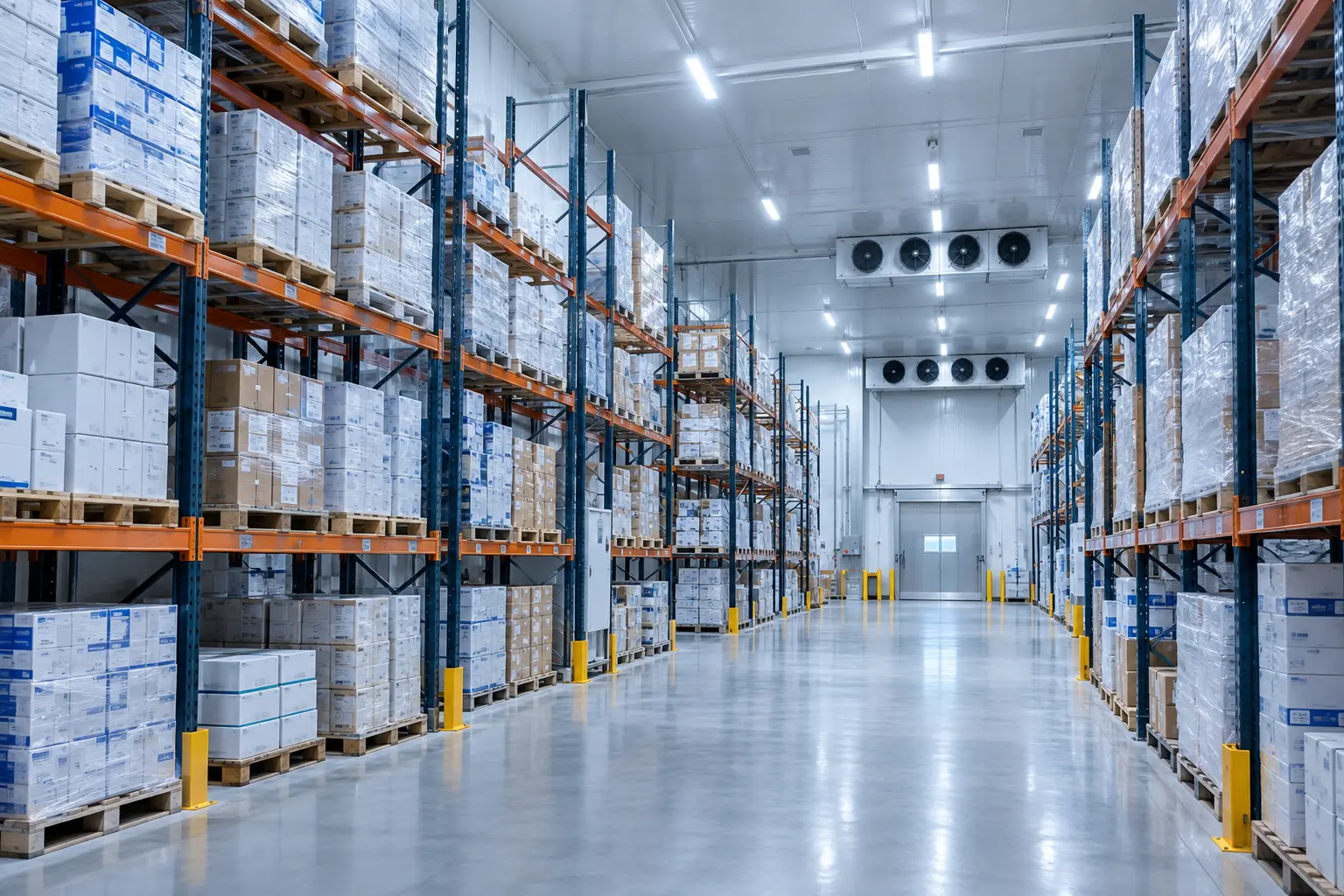
| Cold room / warehouse | 2°C to 8°C or 15°C to 25°C | Many points, one dashboard, mapping-based placement | Multi-point monitoring system |
| Stability chamber / cleanroom | Varies, with RH | Temperature and humidity together, audit trail | Real-time temp + RH |
| Reefer truck / domestic distribution | 2°C to 8°C or frozen | GPS, door and route excursions | Real-time GPS logger |
| Export consignment (air or sea) | Product-specific | Airline approval, report with the goods | Single-use USB or GPS logger |
| Validation and temperature mapping | Product-specific | Accuracy, memory, calibration certificate per unit | Multi-use offline logger |
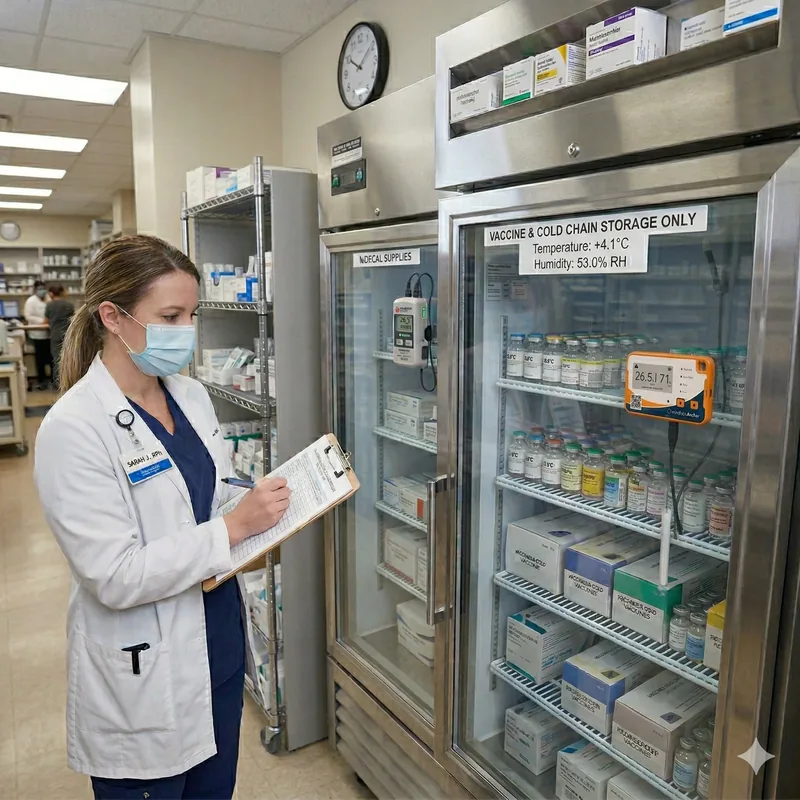
Two questions settle most cases. First, would you act on an alert in the next hour? If yes, you need real-time. Second, does the device come back to you? If not, single-use is cheaper.
Step 2
Check the core technical specs
Once the type is clear, compare devices on eight specs. Datasheets list them all, but they hide what matters in each.
Measurement range
Pick a range that covers your storage condition plus the failure you are trying to catch. A 2°C to 8°C fridge can drop below 0°C when a thermostat sticks, so a logger reading only 0°C to 50°C will miss the freeze event. Built-in sensors usually stop around -30°C to -40°C; below that, use an external probe so the electronics and battery stay outside the cold.
Accuracy and resolution
Accuracy should be small next to your limits. A common rule is that instrument uncertainty should be at most a quarter to a third of the tolerance band you monitor.
For a 2°C to 8°C range, ±0.5°C leaves clear margin. At ±1°C or worse, a reading of 7.5°C could really be 8.5°C, and you cannot tell a real excursion from instrument error. Resolution of 0.1°C is standard; anything coarser hides trends.
Sensor type
| Sensor | Typical range | Strengths | Use for |
|---|---|---|---|
| Thermistor (NTC) | -40°C to 125°C | Accurate and cheap in normal ranges | Fridges, rooms, shipments |
| RTD (PT-100) | -200°C to 600°C | Stable, very accurate, wide range | Ultra-low freezers, process, reference use |
| Thermocouple | -200°C to 1,000°C+ | Extreme range, fast response | Ovens, autoclaves, industrial process |
Logging interval and memory
Memory only matters as time. Use this formula:
Recording time = memory (readings) × logging interval
A logger holding 30,000 readings at a 10-minute interval runs about 208 days. At 1 minute it runs about 21 days. Check the interval your SOP requires, then confirm the logger covers your longest storage period or route with room for delays. For real-time loggers, also check how many readings the device buffers when the network drops.
Connectivity
- USB: Data stays on the device until you plug it in. Simple and network-free, but excursions surface only at download.
- Wi-Fi: Good inside a facility with stable Wi-Fi; fails during router or power outages unless the logger buffers data.
- Cellular (4G/2G): Works without site Wi-Fi and through power cuts if the logger has a battery. Best for Indian sites where Wi-Fi is unreliable.
- Bluetooth: Short range, phone-based download; useful for spot checks, weak for continuous compliance.
Power and battery
Power cuts are the most common cause of cold chain loss in India. A mains-only logger goes silent at exactly the moment you need it. Choose a device with at least several months of battery life, and confirm it keeps recording and alerting when mains power fails.
Alerts and escalation
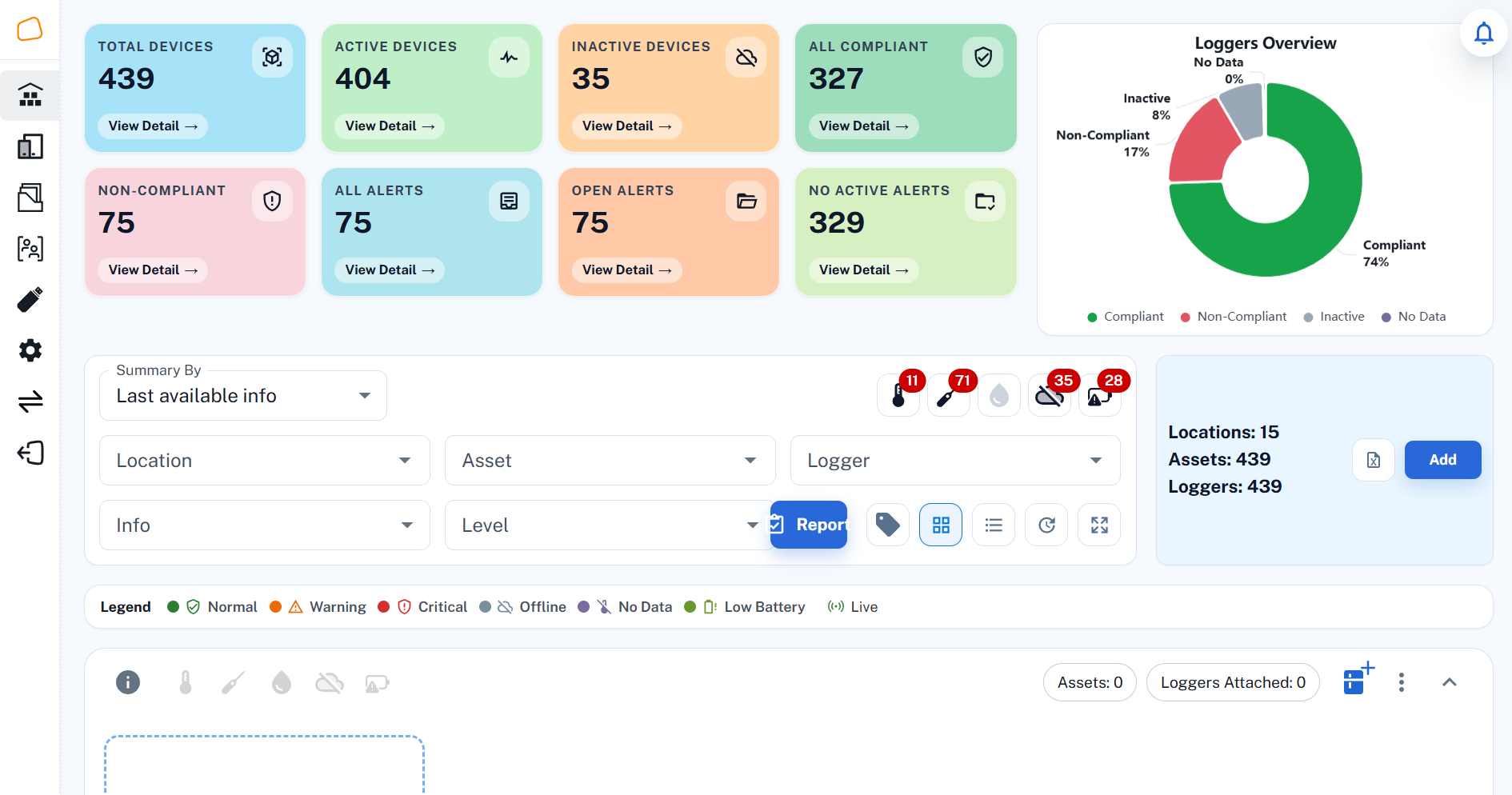
An alert nobody acts on is worthless. Look for SMS as well as email and app alerts, multiple recipients, escalation if the first person does not acknowledge, and an on-site audible alarm for night shifts. Alerts should also cover low battery, sensor disconnect and loss of signal, not just temperature.
Build and environment
Check the IP rating (IP65 or higher for cold rooms with condensation and wash-downs), operating range of the logger body itself, and display. A display lets staff verify readings without logging in, which helps during inspections.
Step 3
Check compliance requirements in India
For pharma, the logger is part of your quality system, so the record must survive an inspection. A cheap logger with an editable spreadsheet export can fail an audit even if every reading was in range.
Revised Schedule M (India GMP)
The revised Schedule M was notified in December 2023 to align Indian GMP with WHO standards. Manufacturers with turnover of ₹250 crore or less could apply for an extension to 31 December 2025, and a further extension for MSMEs was under consideration in late 2025.
For temperature monitoring, inspectors look for storage conditions that are defined, monitored and recorded; instruments that are calibrated on a schedule; deviations that are investigated; and data that meets data-integrity expectations. Your logger and its software should make each of these easy to show.
WHO guidance
WHO's model guidance for storage and transport of time- and temperature-sensitive pharmaceutical products (TRS 961, Annex 9) and its technical supplements cover temperature mapping, monitoring and calibration of devices.
Indian regulators and many export customers use these as the reference, so a logger that supports mapping, calibration records and continuous monitoring fits both.
CDSCO Good Distribution Practices
CDSCO's GDP guidelines extend the same expectations to warehouses, distributors and transport.
Storage areas and vehicles carrying temperature-sensitive products should be monitored continuously, with records kept and excursions handled through a documented process.
21 CFR Part 11 and EU Annex 11 (exports)
If you export to the US or EU, or supply companies that do, your electronic records fall under 21 CFR Part 11 or EU GMP Annex 11. In practice that means:
- Unique user logins and role-based access
- A secure, computer-generated audit trail of every change
- Electronic signatures linked to the record
- Records that cannot be edited or deleted without a trace
- Validated software, with vendor CSV documentation to support it
See how Mindlabs supports this on the 21 CFR Part 11 monitoring page.
ALCOA+ in one line each
| Principle | What it means for a data logger |
|---|---|
| Attributable | Every reading and action is tied to a device and a user |
| Legible | Reports are readable and permanent |
| Contemporaneous | Readings are time-stamped when taken, with a synced clock |
| Original | The first record is kept, not a retyped copy |
| Accurate | Calibrated sensor, documented uncertainty |
| Complete | No gaps; buffered data fills network drops |
| Consistent | Same format and time zone across devices |
| Enduring | Stored for the retention period, backed up |
| Available | Retrievable on demand during an inspection |
Other certifications to check
EN 12830 covers temperature recorders for transport and storage of chilled and frozen goods. Airline approval matters if loggers travel inside air cargo. CE and RoHS are baseline product certifications.
Step 4
Plan calibration before you buy
A logger is only as trustworthy as its last calibration. Ask about calibration before price, because recalibration is a recurring cost and a frequent audit finding.
Accredited vs traceable
- NABL-accredited calibration (ISO/IEC 17025): the lab itself is assessed by India's accreditation body. This is what most Indian pharma QA teams and auditors expect.
- Traceable calibration: the reference instrument links back to national standards, but the lab may not be accredited. Acceptable for many non-GMP uses, weaker in a pharma audit.
What a good certificate shows
- Device serial number matching the unit
- Test points that bracket your use range (for 2°C to 8°C, points around 0°C, 5°C and 10°C, not just 25°C)
- As-found readings, adjustments made, and as-left readings
- Measurement uncertainty at each point
- Reference instrument ID and its own calibration due date
- Lab accreditation number, date and signatory
How often to recalibrate
Annual recalibration is the common default. Shorten it for critical storage, ultra-low use, or devices that showed drift last time. Lengthen it only with drift history to justify the change.
Also ask the vendor what happens during recalibration. If the logger must be sent away, you need spare units or a swap programme, or the location goes unmonitored. Check how your sensors may drift with the Sensor Drift Risk Score.
Step 5
Understand validation and mapping vs monitoring
Mapping and monitoring use similar loggers for different jobs. Mapping finds where the risk is; monitoring watches those spots every day.
| Temperature mapping | Continuous monitoring | |
|---|---|---|
| Purpose | Find hot and cold spots, prove the space performs | Detect and record excursions every day |
| When | Before use, after changes, and periodically | All the time |
| Duration | Typically several days, including empty and loaded states, and summer and winter | Indefinite |
| Number of loggers | Many, in a 3D grid | Few, at points chosen from the mapping |
| Logger needs | Accuracy, memory, calibration per unit | Alerts, uptime, audit trail |
For a monitoring system, plan qualification as part of the purchase:
- 1IQ (installation qualification): Devices installed as specified, serials and certificates recorded.
- 2OQ (operational qualification): Alarms, alerts, audit trail, access control and reports work as intended.
- 3PQ (performance qualification): The system performs in real use over time.
Step 6
Place the logger where the risk is
The right logger in the wrong spot gives you a clean record of the wrong temperature. Placement should follow your mapping study, not convenience.
- Fridges: Put the probe in the middle of the product zone, not in the door or against the back wall. For vaccines, a probe in a buffer (glycol or a sand-filled vial) tracks product temperature and ignores brief air spikes from door openings.
- Freezers and ultra-low units: Run an external probe inside and mount the logger body outside, so the battery and electronics stay warm.
- Cold rooms and warehouses: Monitor the hot and cold spots found during mapping, plus near doors and evaporators. High racks near the ceiling often run warmest.
- Shipments: Place the logger with the product, inside the pack, not on the outside of the box or near a gel pack.
- Avoid: Direct airflow from fans, heat from lights or motors, and outer walls in summer.
Step 7
Compare total cost of ownership, not device price
The sticker price is usually the smallest part of what a logger costs over five years. Compare vendors on the full list below.
| Cost item | What to ask |
|---|---|
| Device and probes | Price per unit, probes and mounts included or extra |
| Software / cloud subscription | Annual fee per device, number of users, data retention included |
| SIM and data | Included in subscription or billed separately |
| Calibration | Recalibration fee per year, NABL or traceable, turnaround time |
| Downtime during calibration | Swap units provided or extra loggers needed |
| Validation | IQ/OQ templates and CSV documents included or charged |
| Batteries and replacement | Rechargeable or replaceable, expected device life |
| Staff time | Manual downloads, report compilation, logbook entries avoided |
| Excursion risk | Value of one lost batch or rejected consignment |
The last row usually decides it. If one lost batch of vaccines or one rejected export consignment costs more than the whole monitoring system, real-time alerts pay for themselves the first time they fire.
Checklist
URS checklist: questions to send every vendor
A user requirement specification (URS) lists what the system must do, so vendors answer the same questions and QA has a baseline for qualification. Copy this list into your URS and mark each item as must-have or nice-to-have.
0 / 26 items ticked
Measurement
0/5Data and connectivity
0/4Alerts
0/5Compliance and data integrity
0/6Calibration and support
0/4Commercial
0/2Common mistakes when choosing a data logger
- 1.Buying on device price alone. The subscription, calibration and one lost batch outweigh it.
- 2.Calibrating at the wrong points. A certificate tested only at 25°C says little about a 2°C to 8°C fridge.
- 3.Choosing Wi-Fi-only for sites with unreliable power. The router dies in the same power cut that warms the fridge.
- 4.Sending alerts to one person. Excursions at 2 a.m. on a Sunday need escalation.
- 5.Placing the sensor in the door or near the evaporator. The record looks fine or looks alarming for the wrong reasons.
- 6.Exporting data to an editable spreadsheet for reports. This breaks data integrity in an audit.
- 7.Skipping mapping. Monitoring points chosen by convenience can miss the warmest spot in the room.
- 8.Forgetting calibration downtime. A logger away at the lab leaves the location unmonitored.
How Mindlabs loggers map to these needs
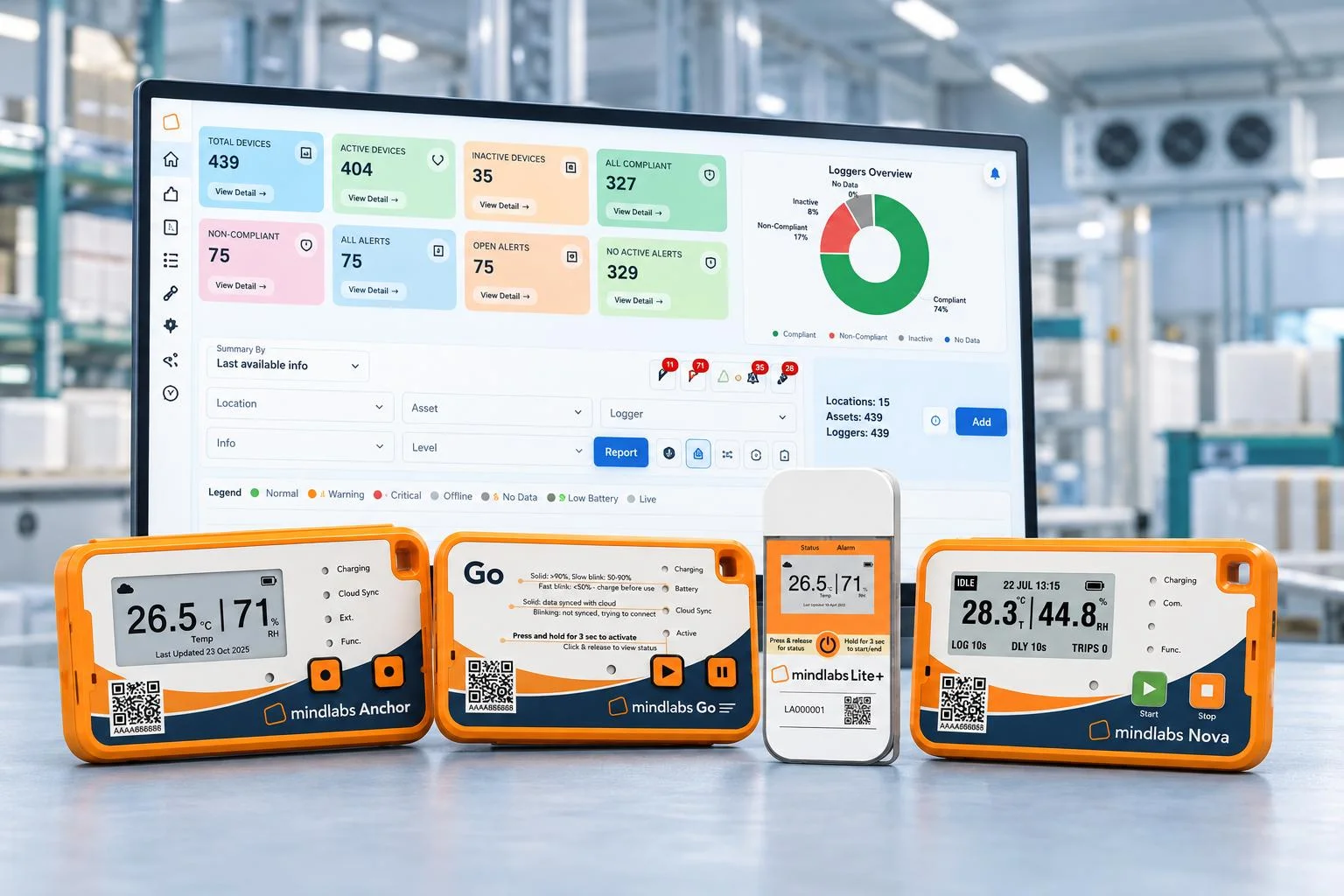
Mindlabs builds temperature data loggers in Hyderabad for pharma, cold chain and validation. All four measure temperature to ±0.5°C with 0.1°C resolution.
| Need | Mindlabs logger | Why it fits |
|---|---|---|
| Fixed storage with live alerts | 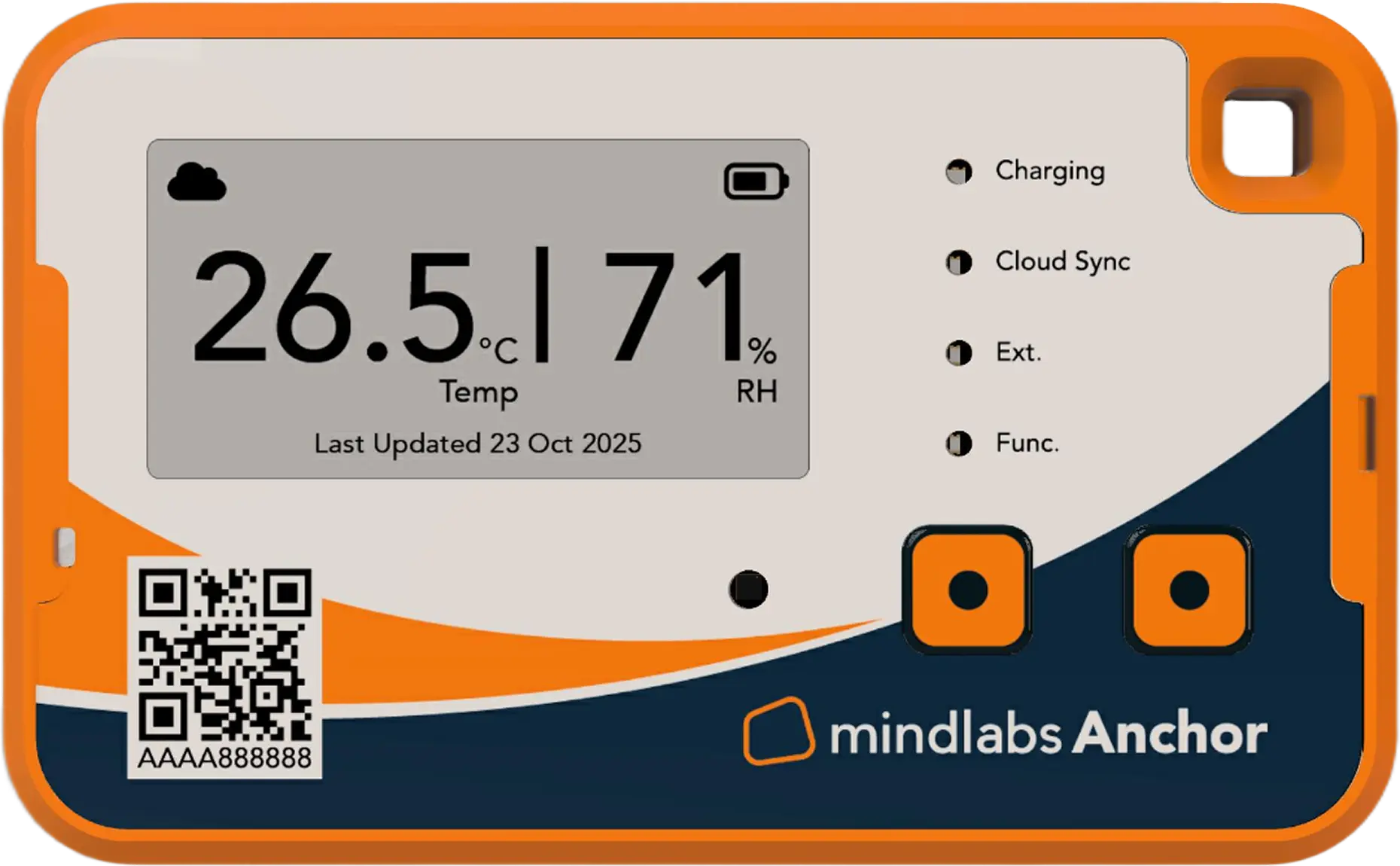 Anchor Anchor | 4G/2G/Wi-Fi, 1-year battery, SMS/email/app alerts, PT-100 probe to -200°C, 21 CFR Part 11 |
| Shipments in transit | 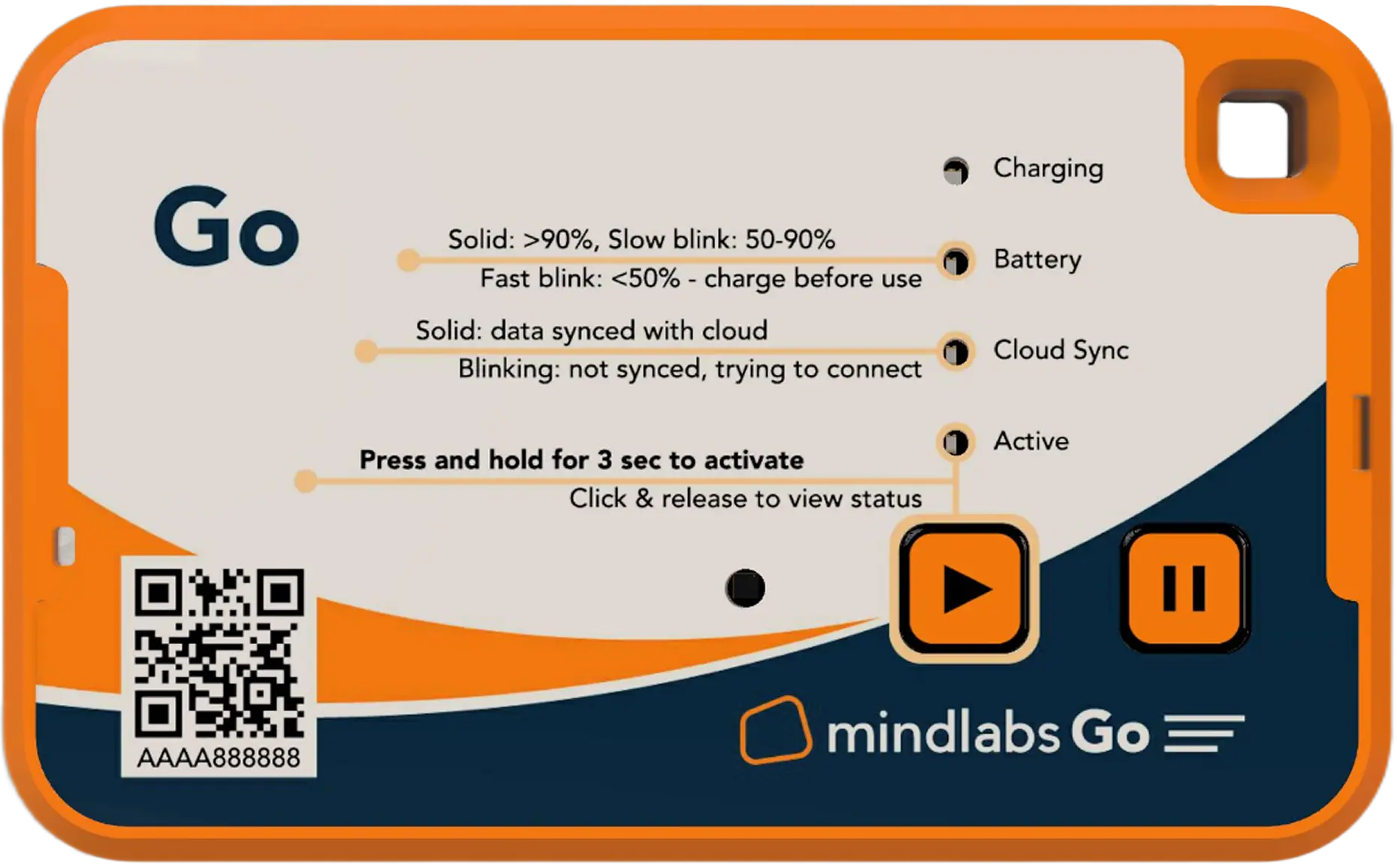 Go Go | GPS, tamper and fall alerts, keeps logging through network gaps, airline approved |
| Single export consignment | 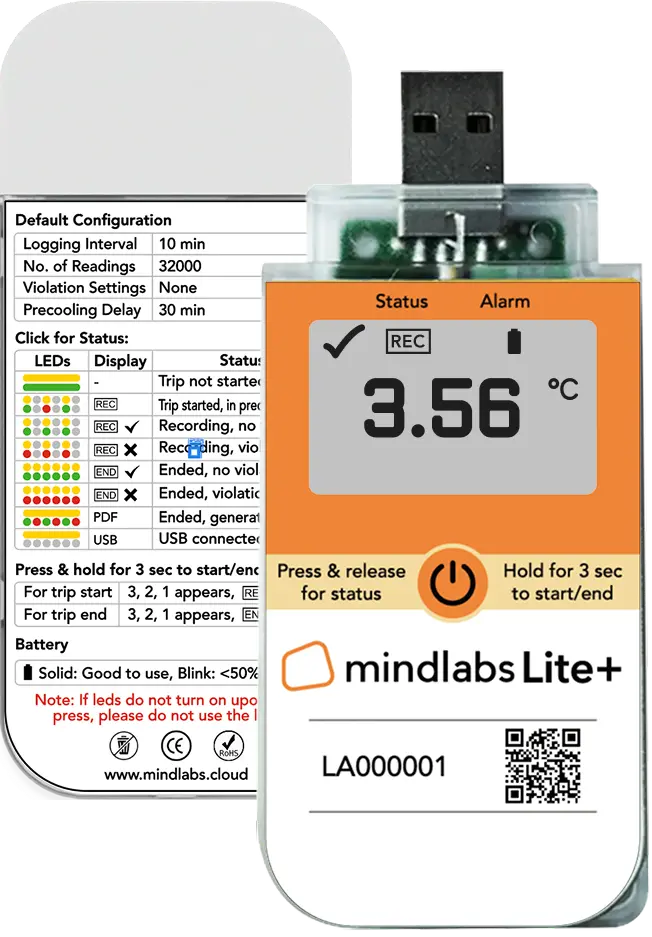 Lite Plus Lite Plus | Single-use USB, up to 220 days recording, auto PDF report, EN 12830 |
| Validation and mapping | 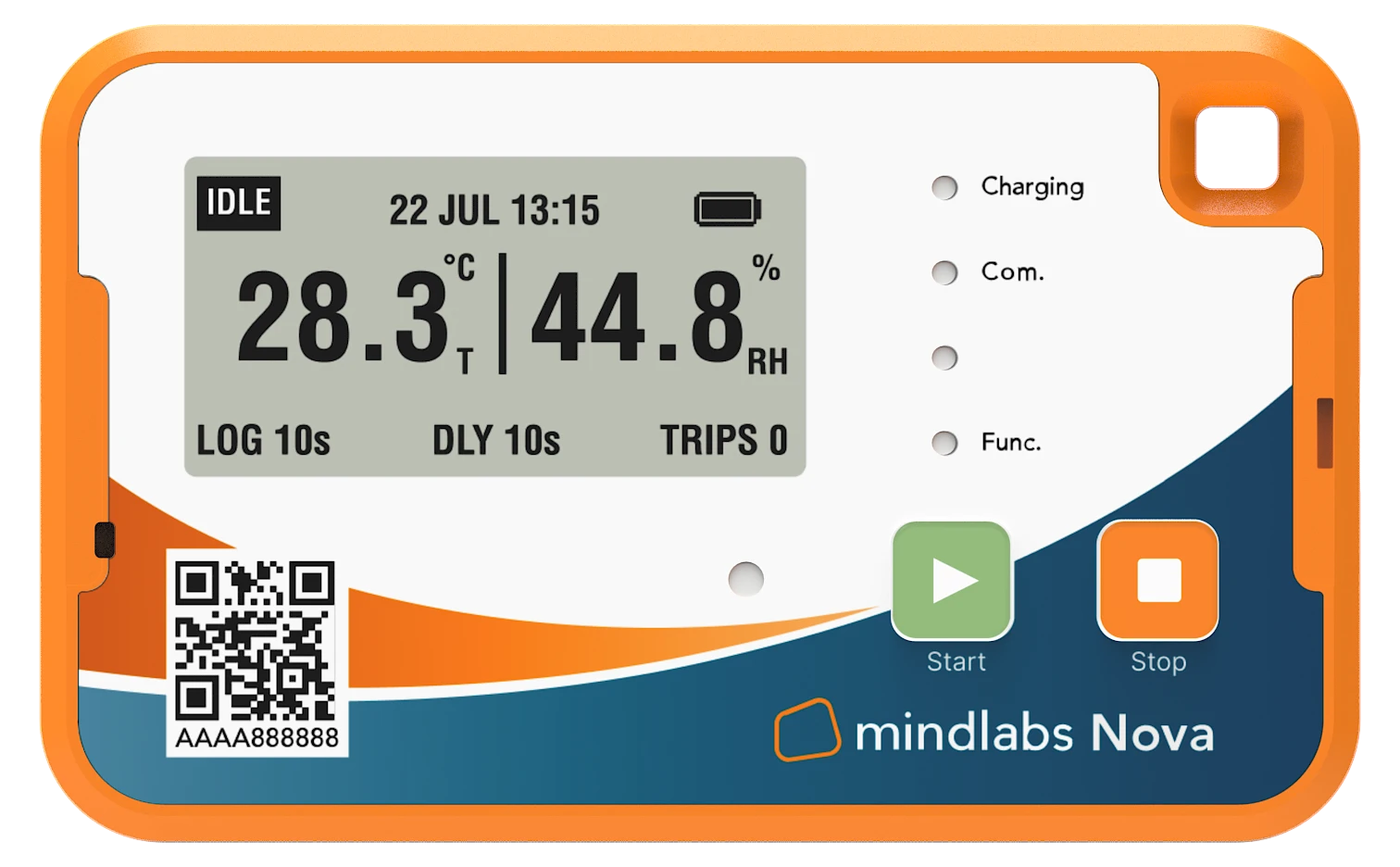 Nova Nova | 85,995 readings, temp + RH, 21 CFR Part 11 compliant reports |
Every Mindlabs logger ships with a calibration certificate, and Mindlabs provides CSV documentation for validation.
Have a URS ready?
Send it to the team and we'll answer it line by line.